May 15: Little Lost Sheep
Another traveller arrived in my room late last night and took the top bunk on the opposite bed. She must’ve changed her mind partway through the night, because she was sleeping on the bottom bunk when I woke this morning.
This “self-serve” mini-hostel is comfortable enough, but a bit slap-dash in places. In my room there’s a wardrobe, but the bunk bed is so close to it that you can hardly open the door. There’s also a picture in the room, completely covered by a bunk.
I showered, shaved and dressed, then looked in my toiletry bag for my electric shaver, which I use as a finisher—only to find it not there. I looked throughout my room, the bathroom, my bags… no sign of it. I felt sure I’d packed it in Bathurst, but I phoned the Comfort Inn anyway. After some somewhat torturous conversation, they called back to say they hadn’t seen it either
Then I remembered: yesterday, after reaching Gare du Palais, I’d brushed my teeth in one of the toilets; I could’ve left it there. Hope renewed, I finished dressing, slathered on some sunscreen and went out into a warmer day than yesterday. Took a local bus into the central city and walked past a variety of shops to the station.
Stretching my high-school French to the limit—“Ou est le bureau des objets trouvé?”—I was directed to the ticketing office, where they fished out my razor, still in its zip-up bag. Merci tres beaucoup!
Cats and a Climb
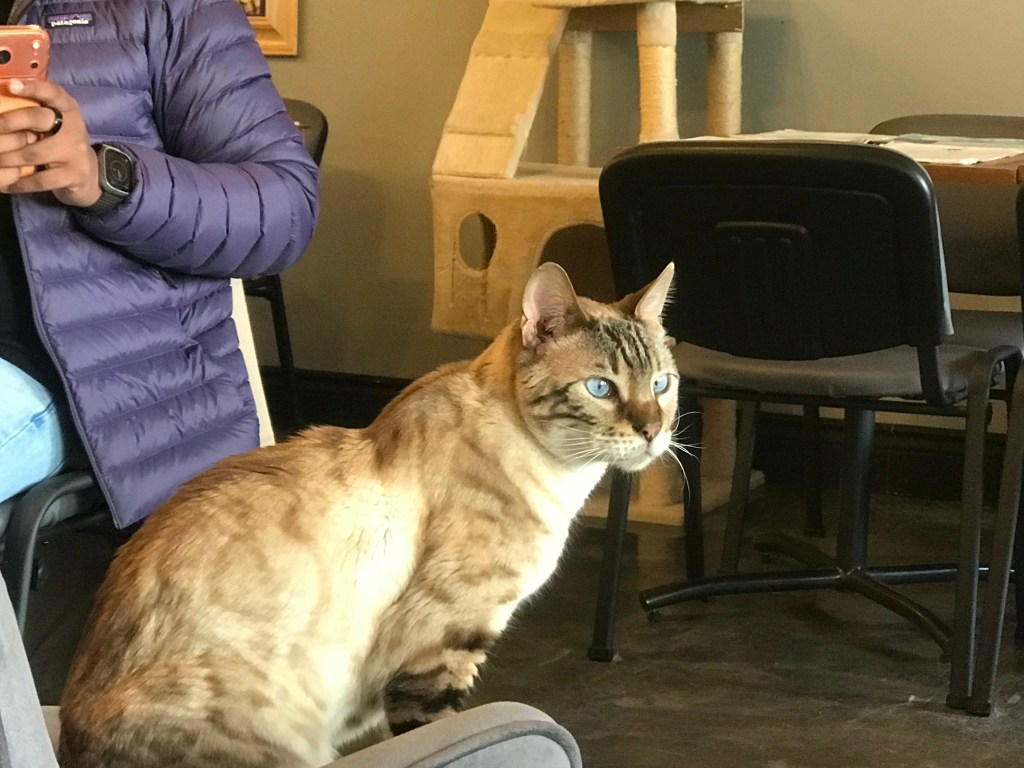
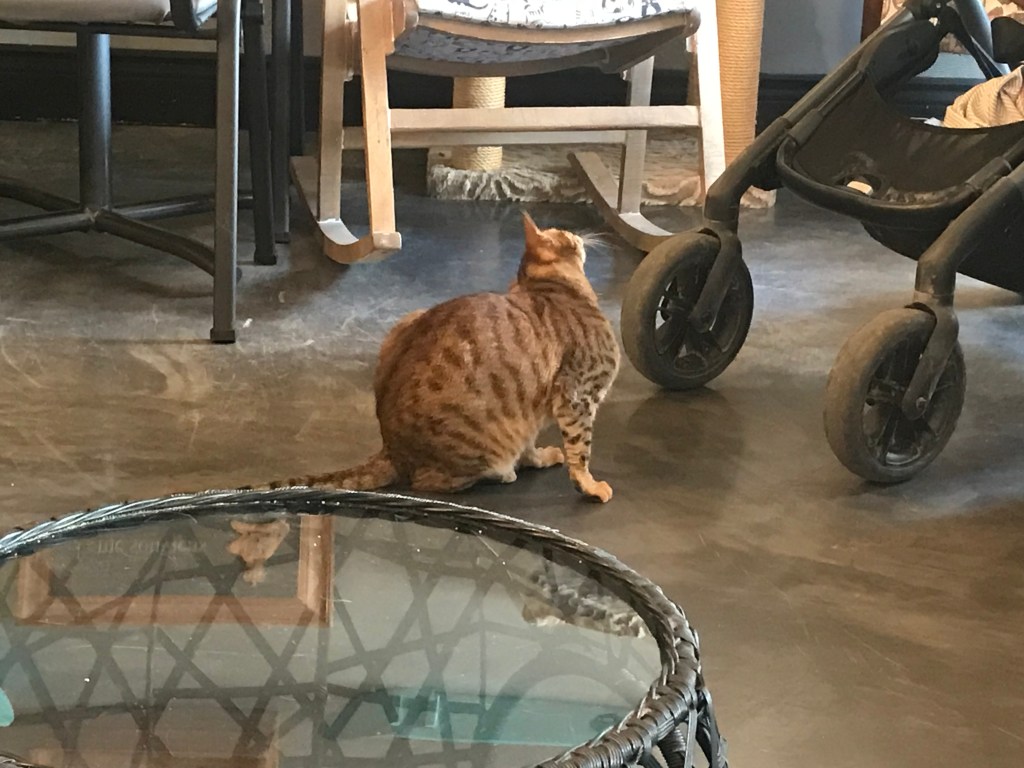
After finishing my shave in the park outside the station, I went across the road. I noticed a cat café there, so naturally I went in. I drank a coffee while watching cats saunter around the dining area or climb on raised platforms. The café isn’t just for the benefit of cats; according to info sheets around the tables, many of the café workers are war/police veterans with mental health issues.
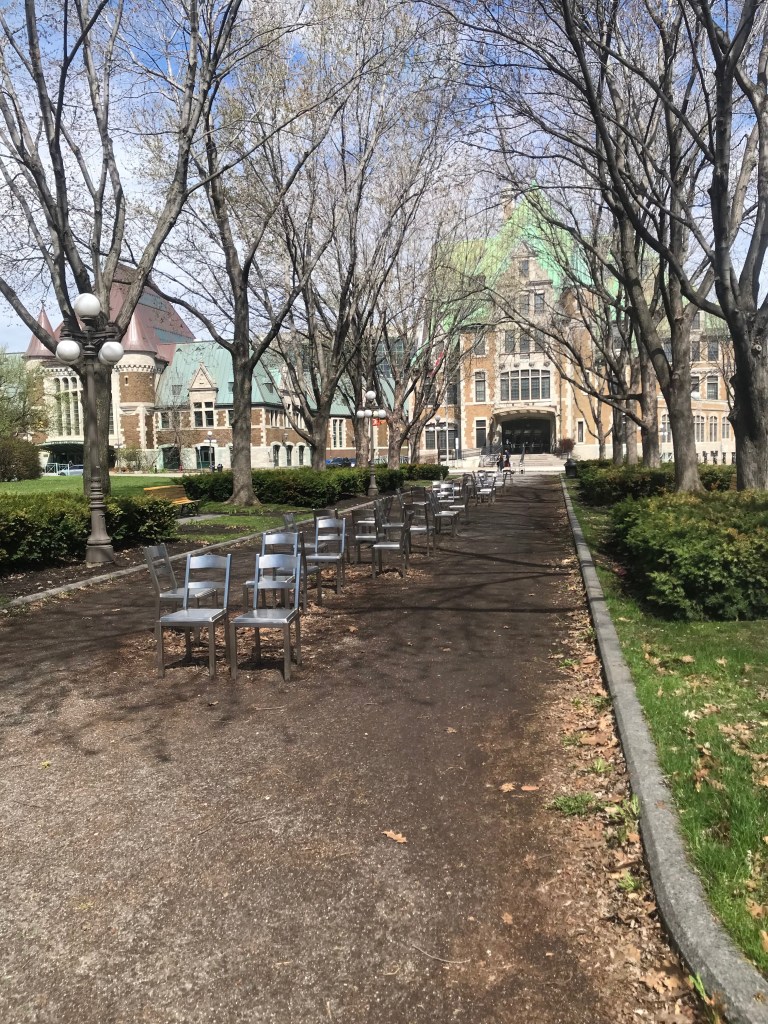
My next venue was The Old City, and for that, I had to walk up some steep streets.
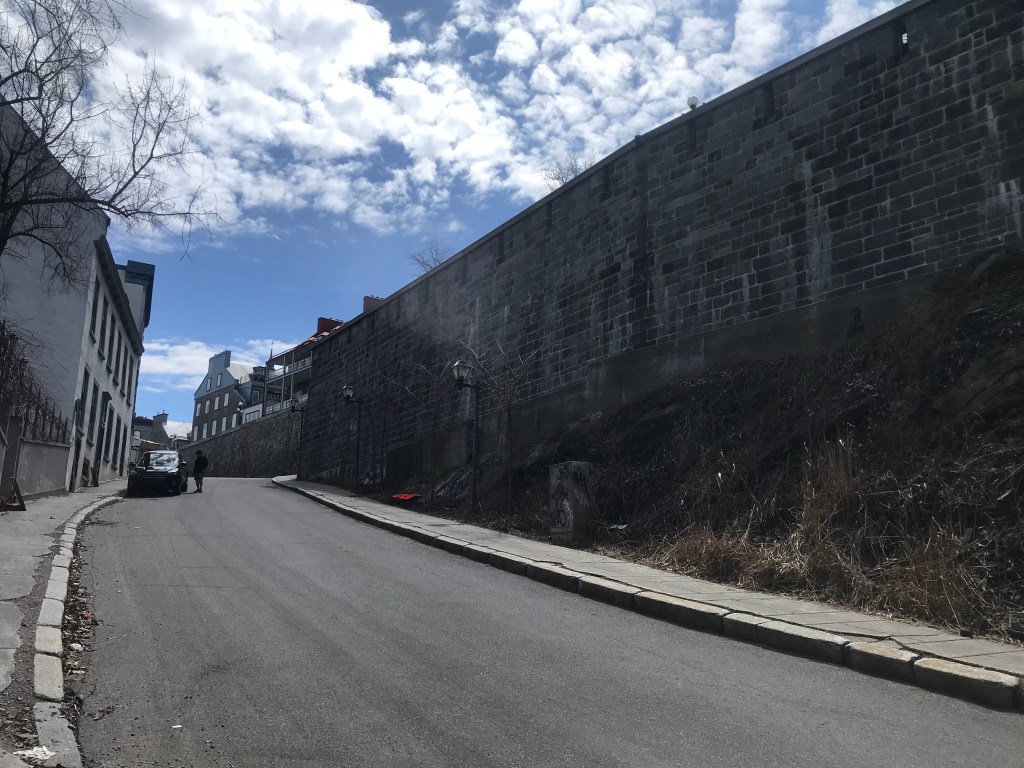
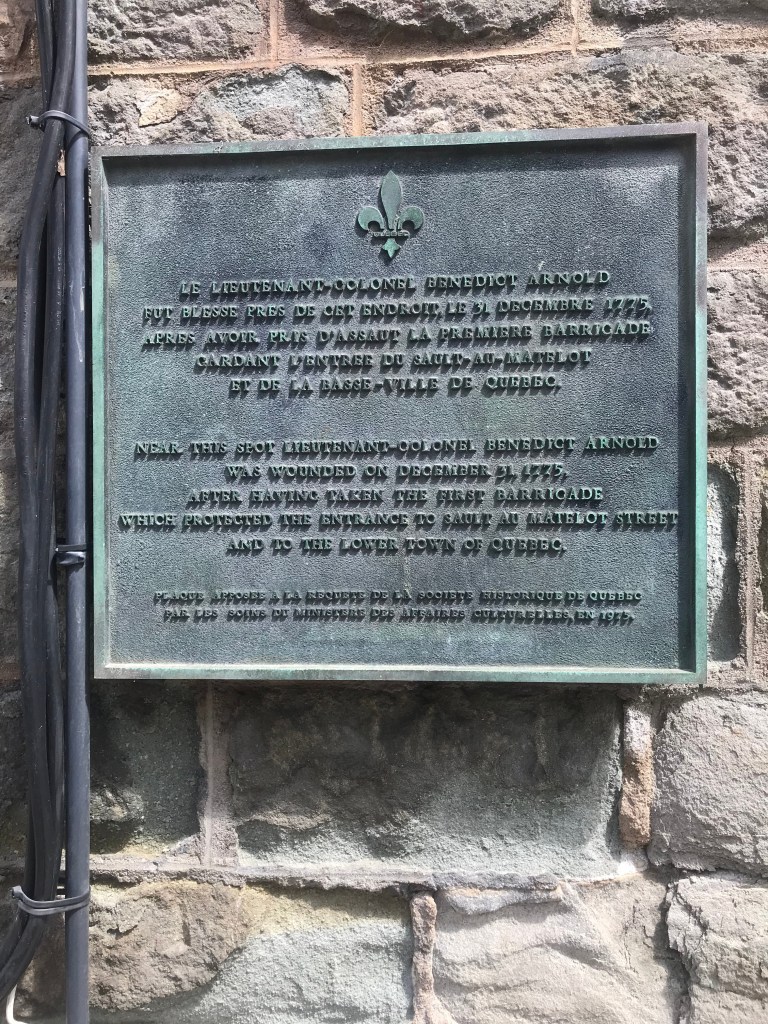
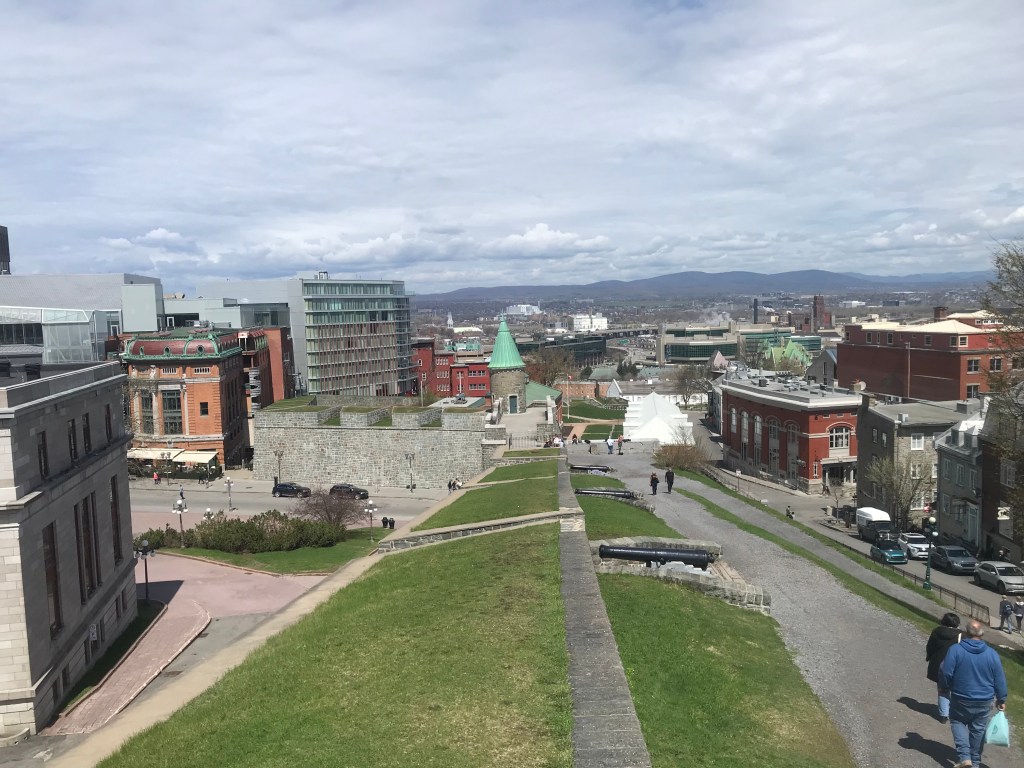
Up some stairs, and I was behind the outer fortifications of Old Québec. The original city had been built near the top of the hill, Cap-Diamant, overlooking the harbour, with stone fortifications placed around over time, first by the French, then the English.
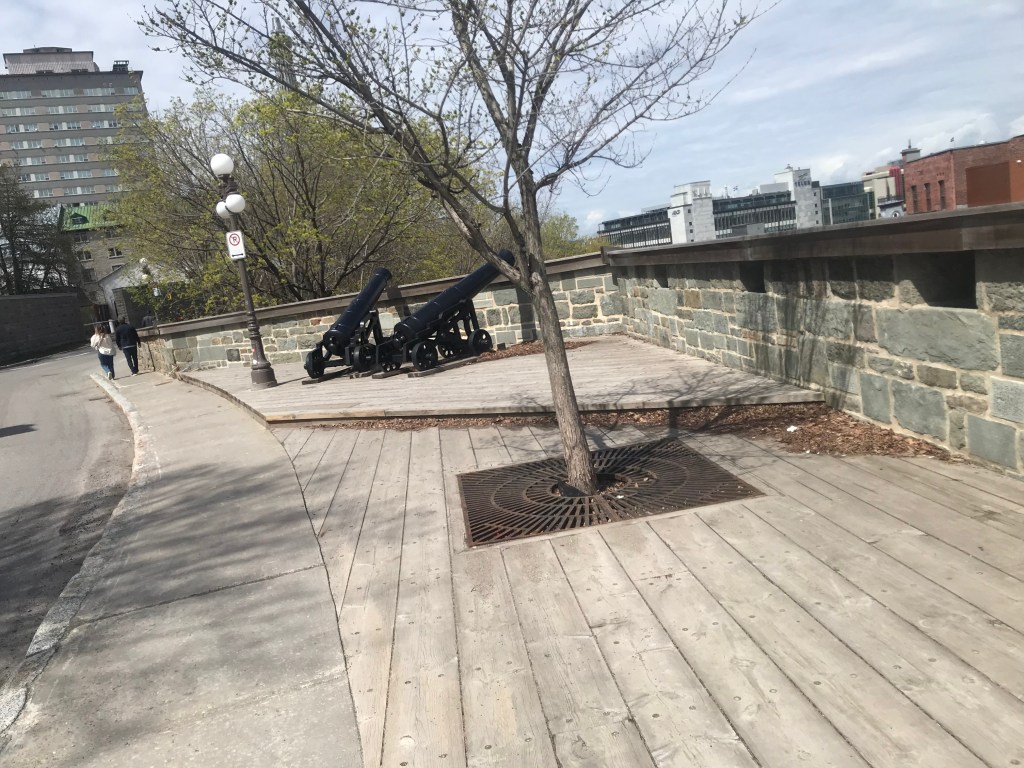
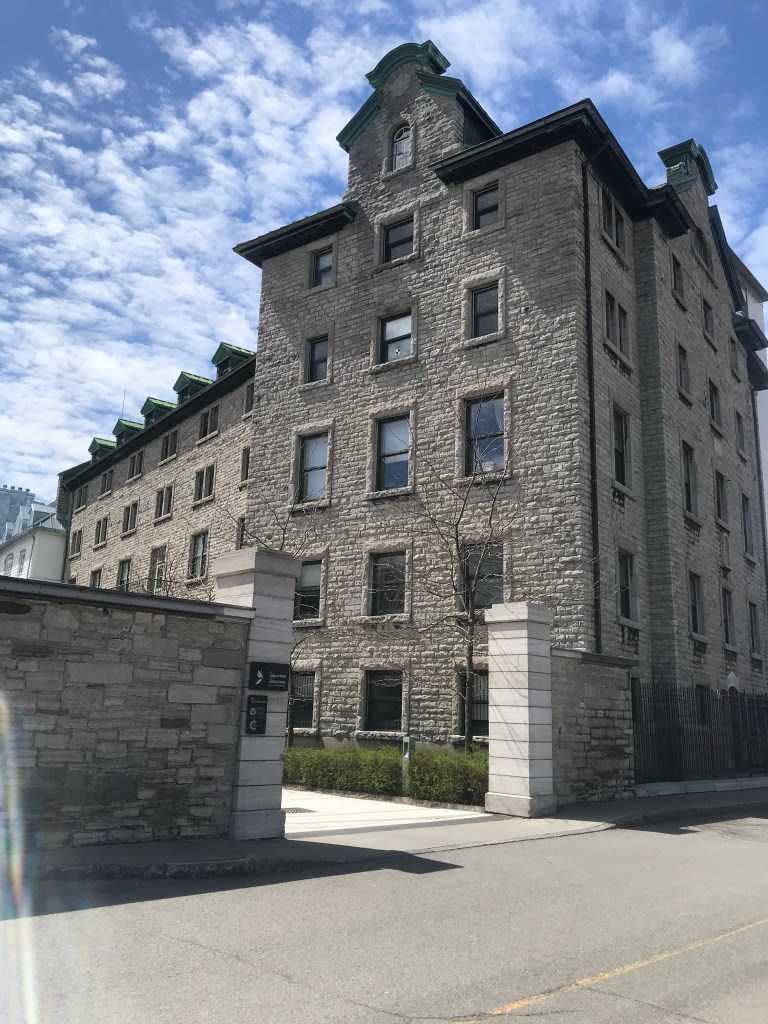
After looking out over the cannons, I walked further in to the city, amazed by its architecture.
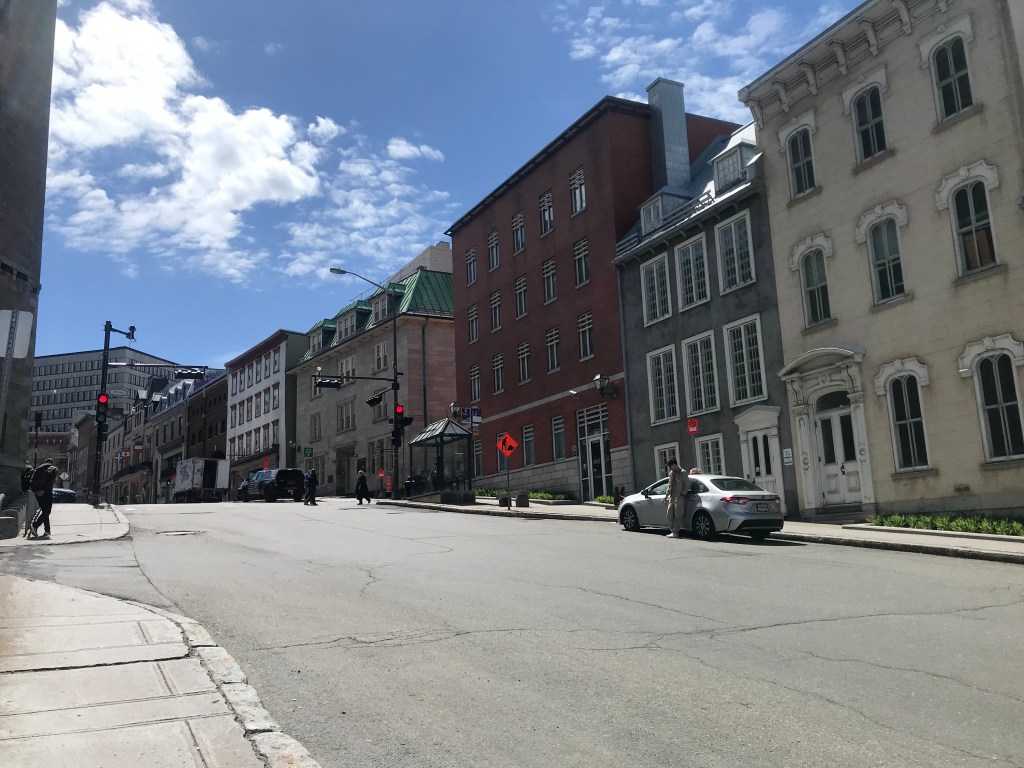
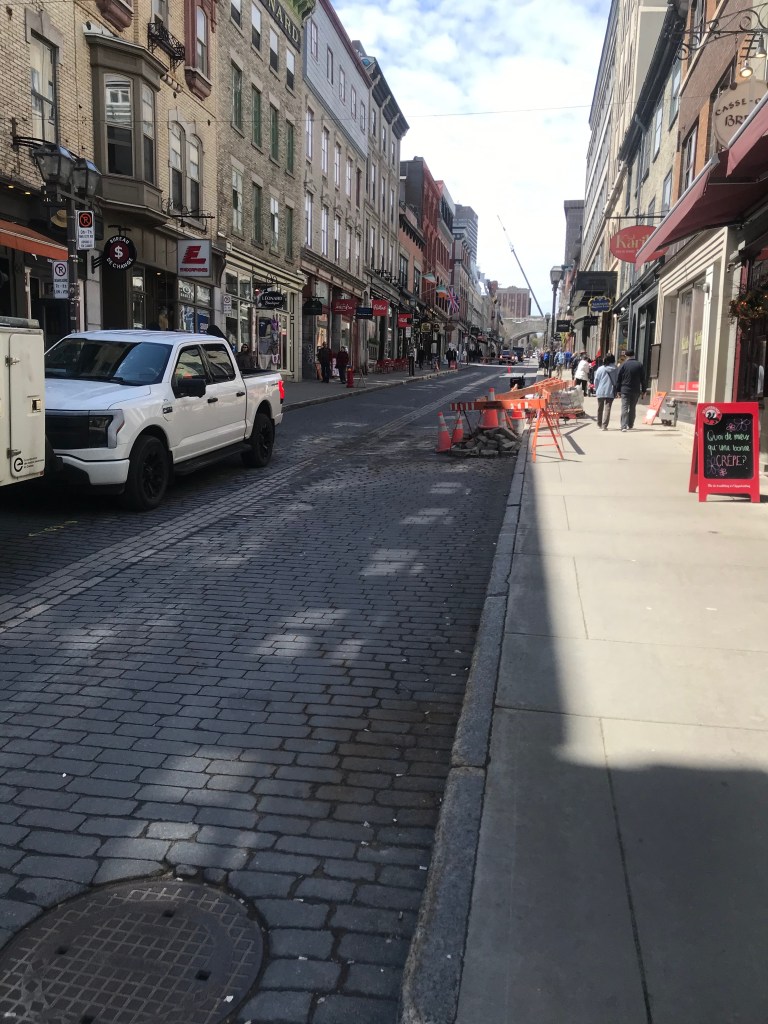
I reached the Inner Fortifications, where St John’s Gate invited more exploration.
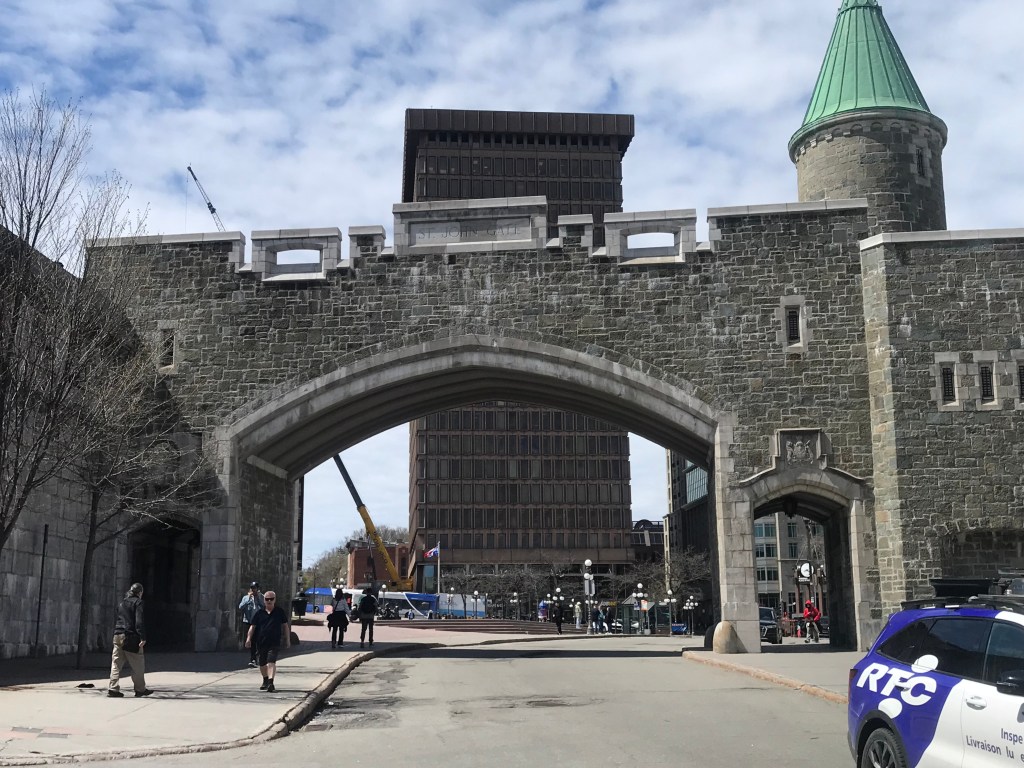
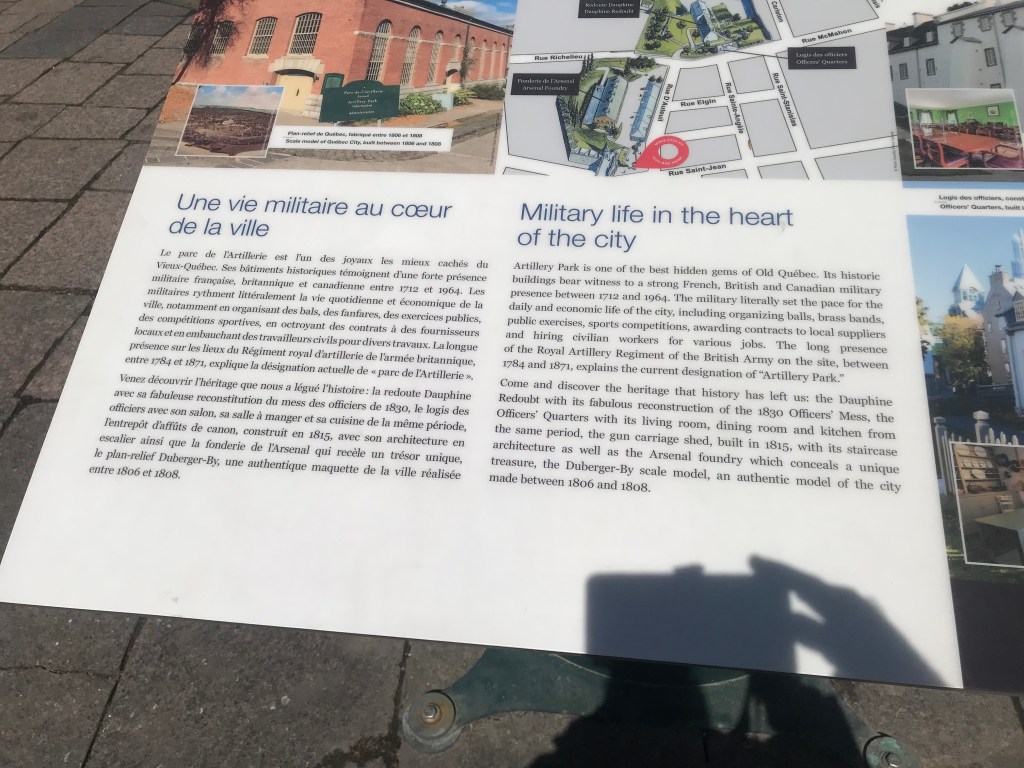
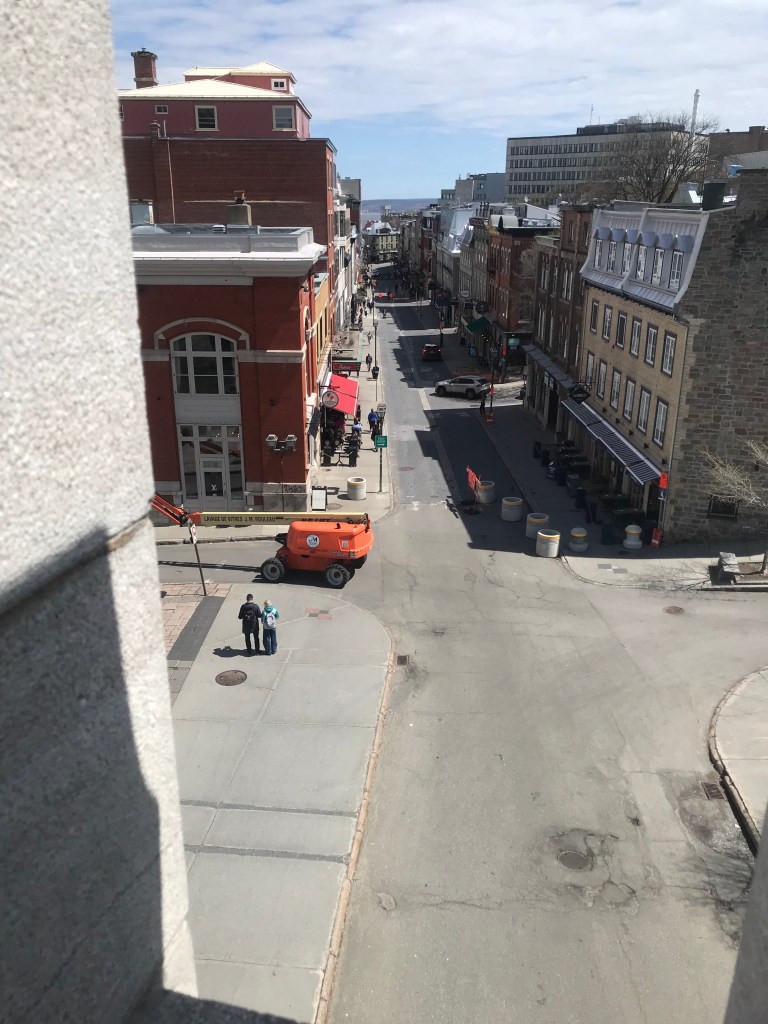
I walked around it, upon it, and further along on the great stone walls.
The Other Citadel
La Citadell de Québec sits at the top of the hill, first constructed by the French, then enhanced by the English after they took over. It’s a bit smaller than its Halifax counterpart, but in better condition, because it’s still an active military base, home to the Royal 22e Régiment (the “Van Doos”, but don’t let them hear you say that). Because of this, the only way to see the citadel is as part of a guided tour.
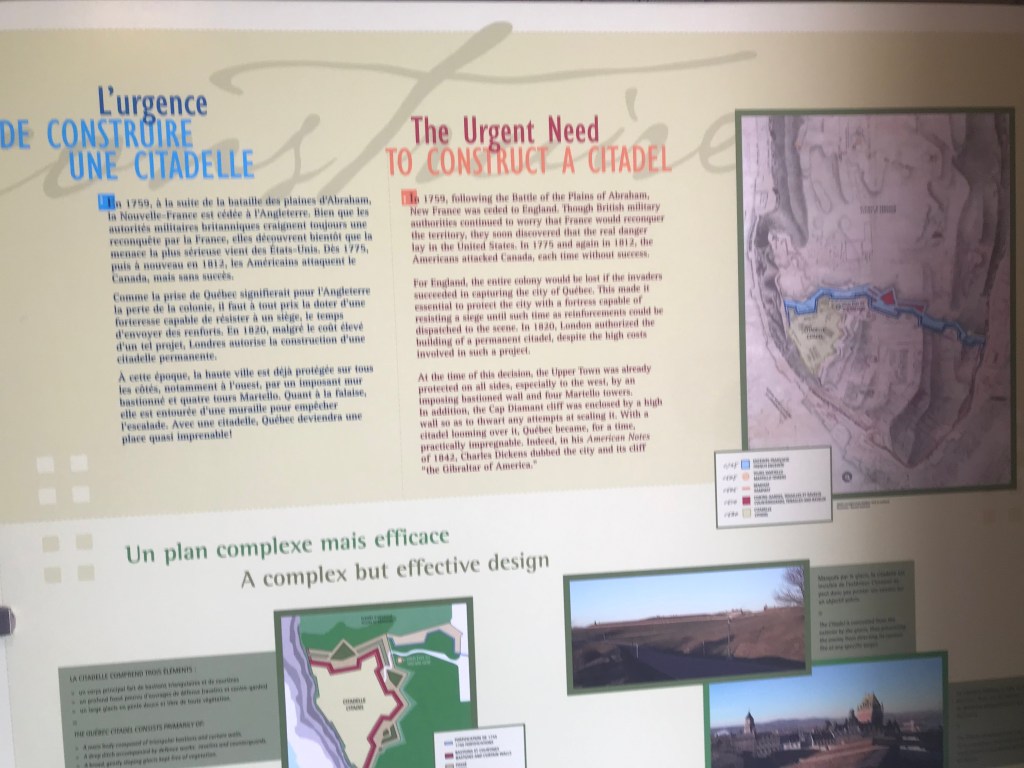
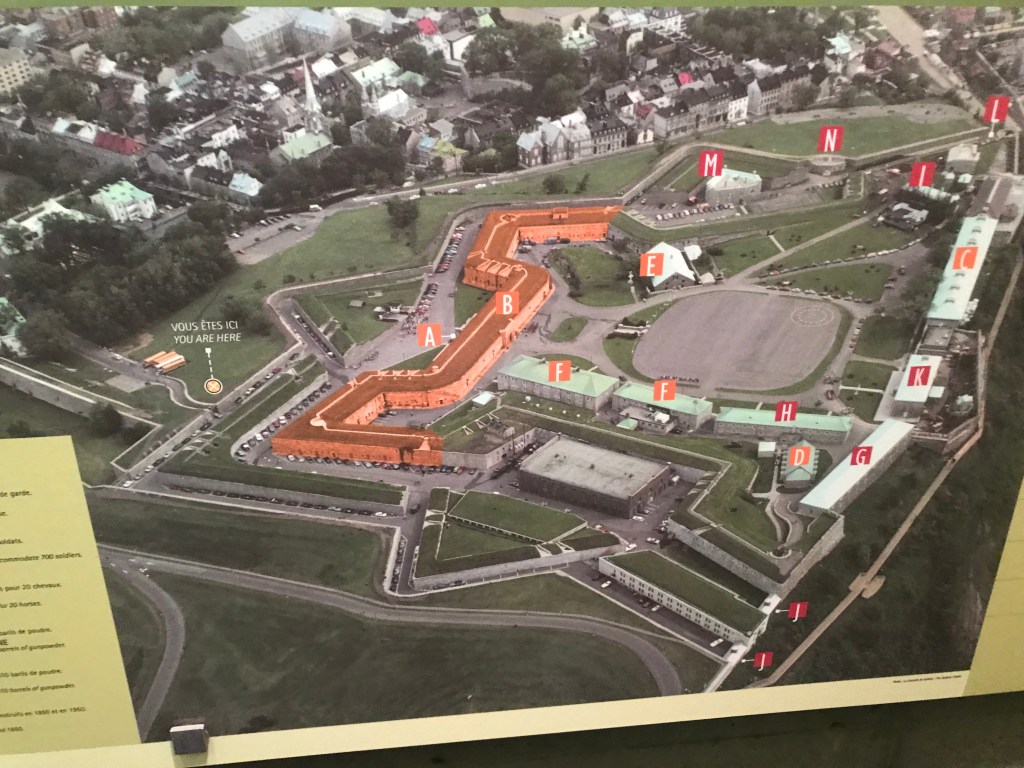
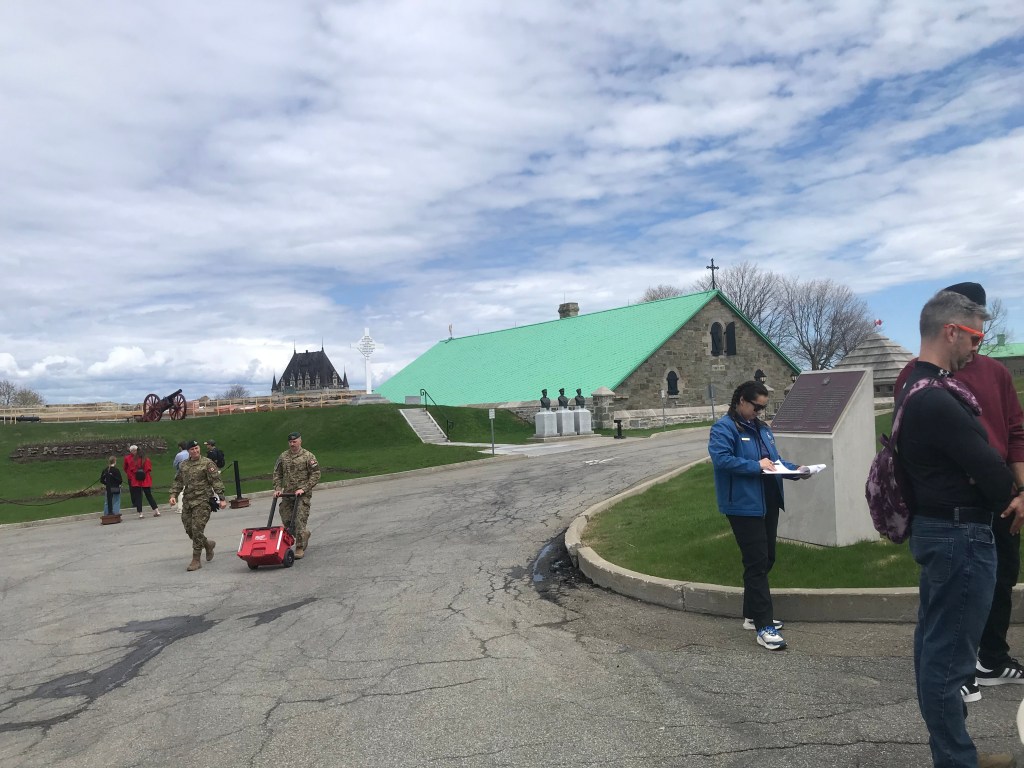
Our group was taken first to the powder store, one of the few buildings from the original French citadel still standing.
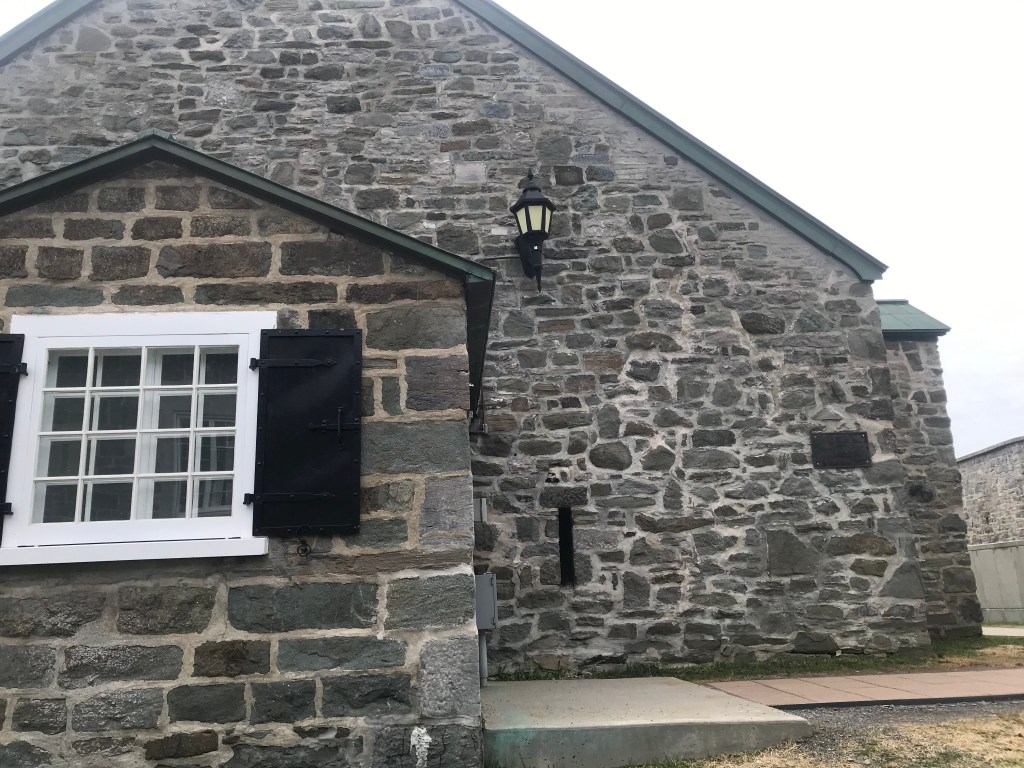
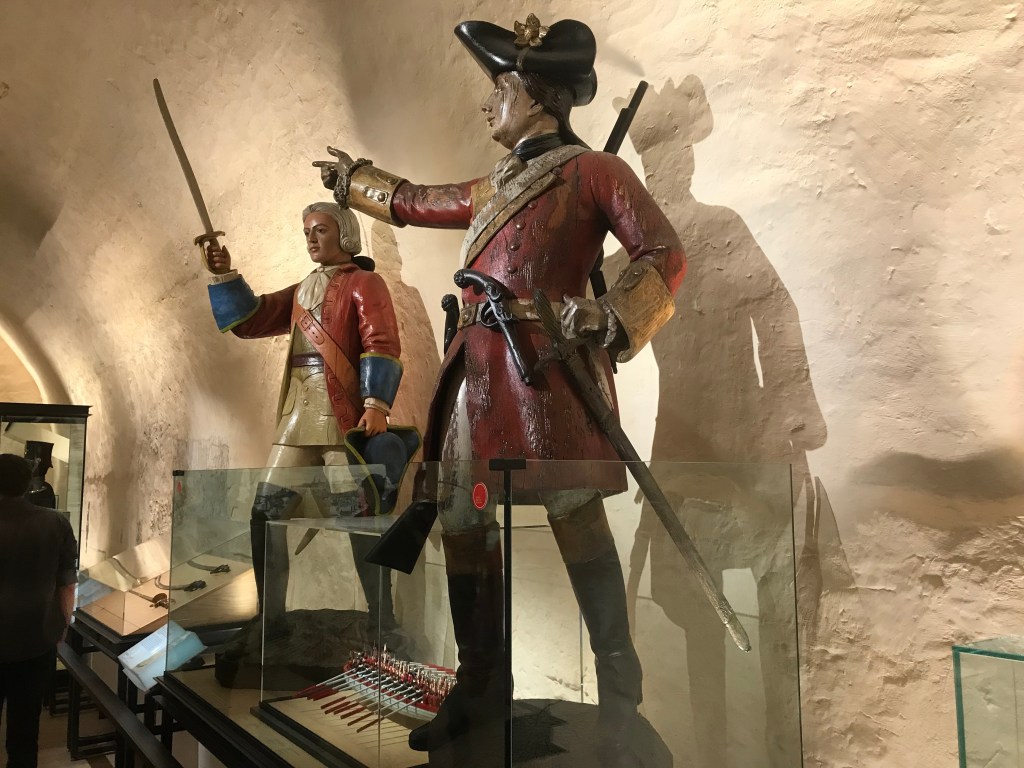
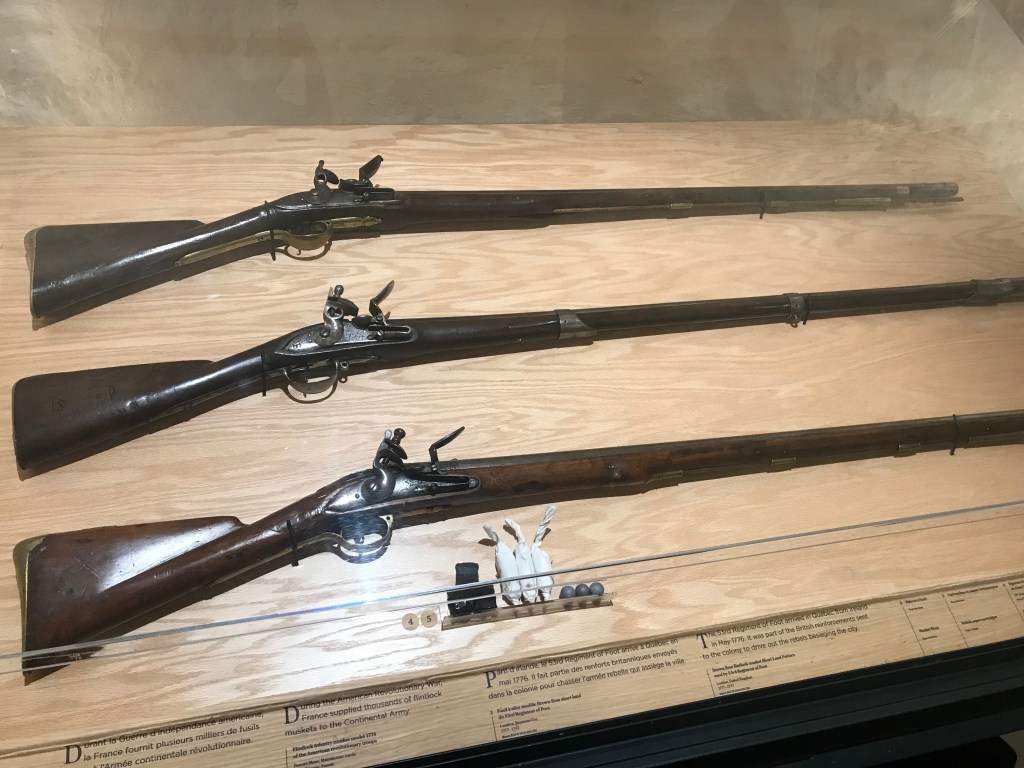
We were taken under one of the Citadel’s defence walls, where soldiers with muskets could defend the city.
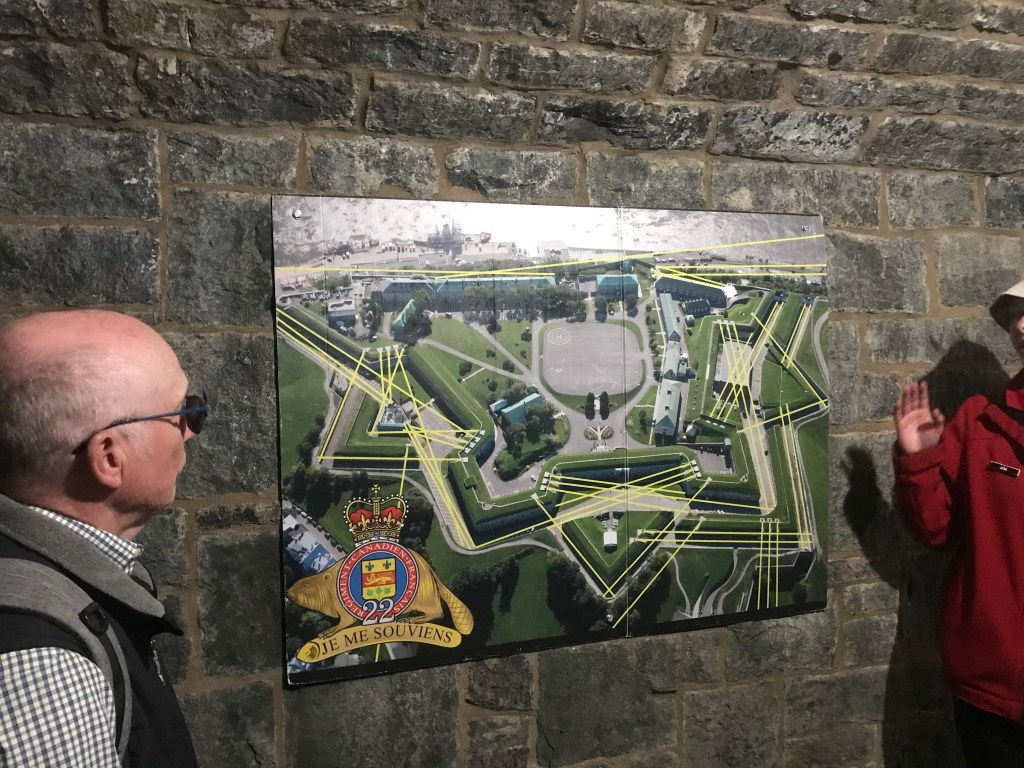
Other buildings included the hospital and the old officers’ mess. The Canadian governor general also has a second residence here.
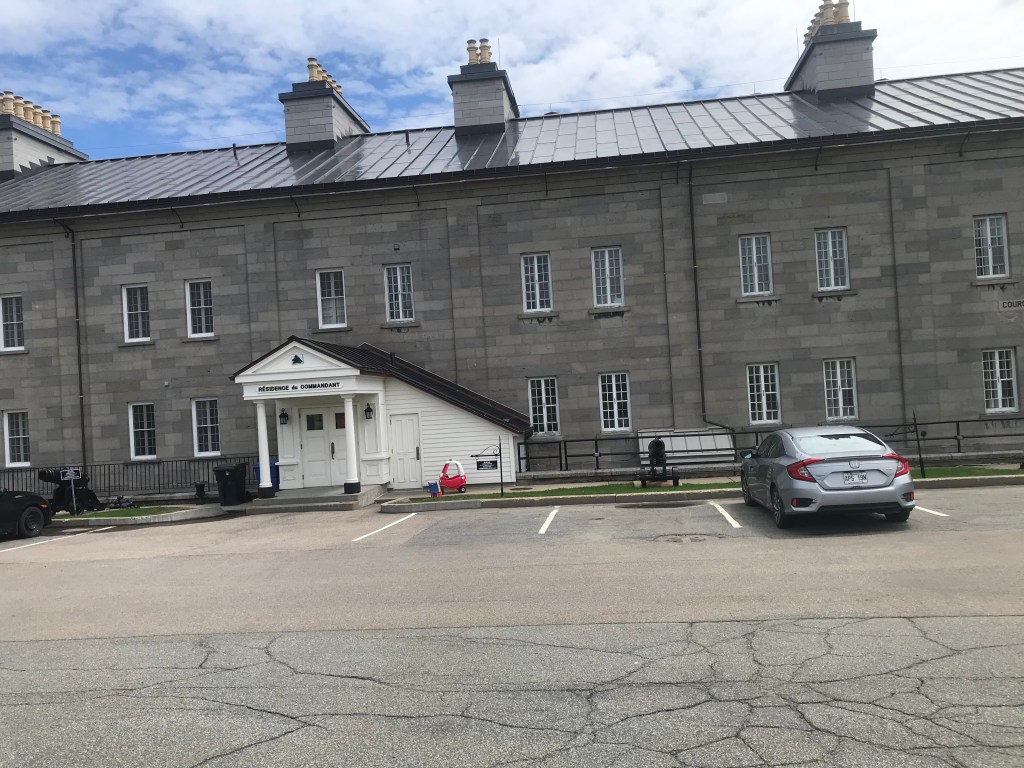
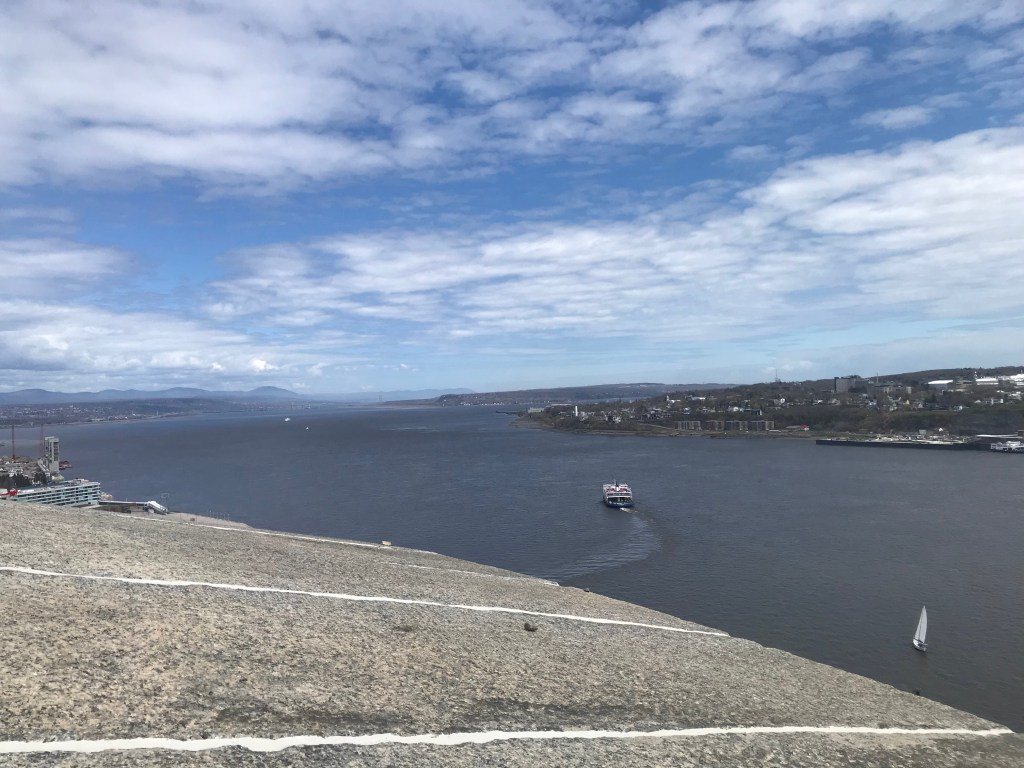
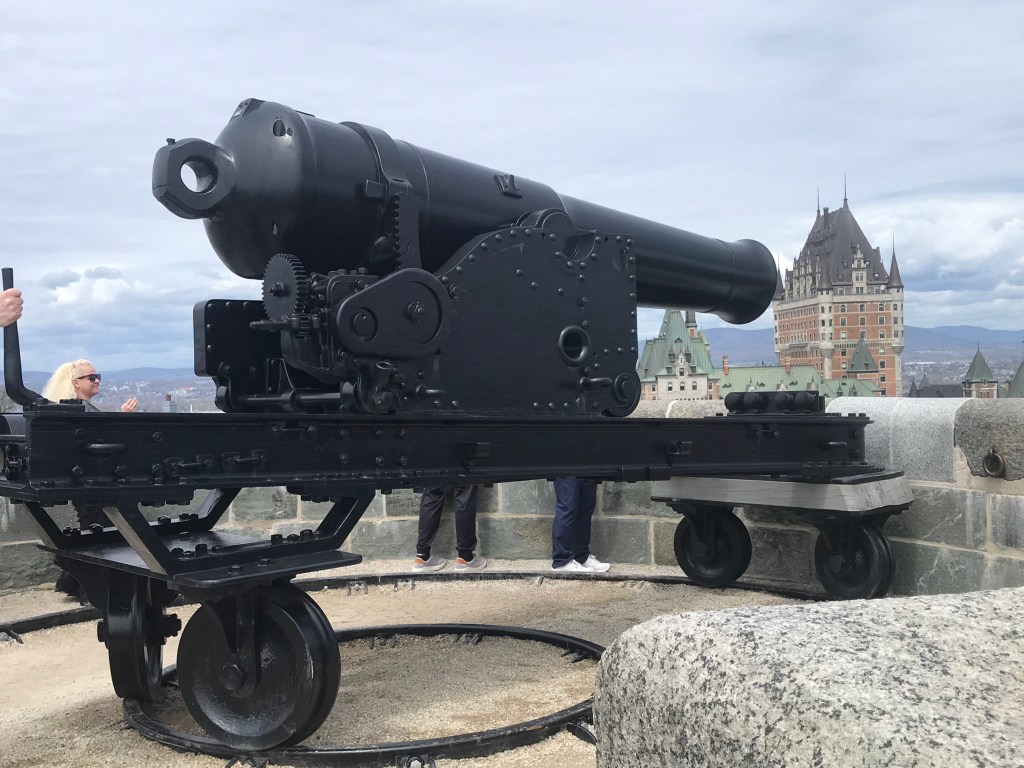
Out on the North Bastion, we could see just how well the citadel could defend the harbour.
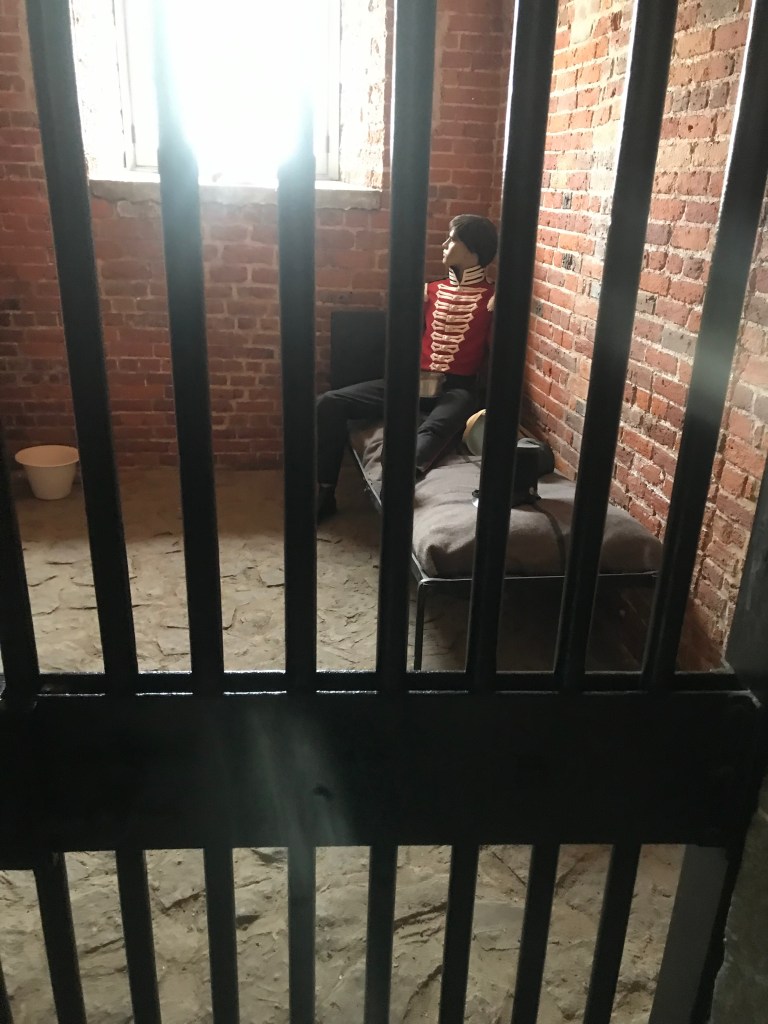
In the old prison, there were displays about how the modern regiment functions.
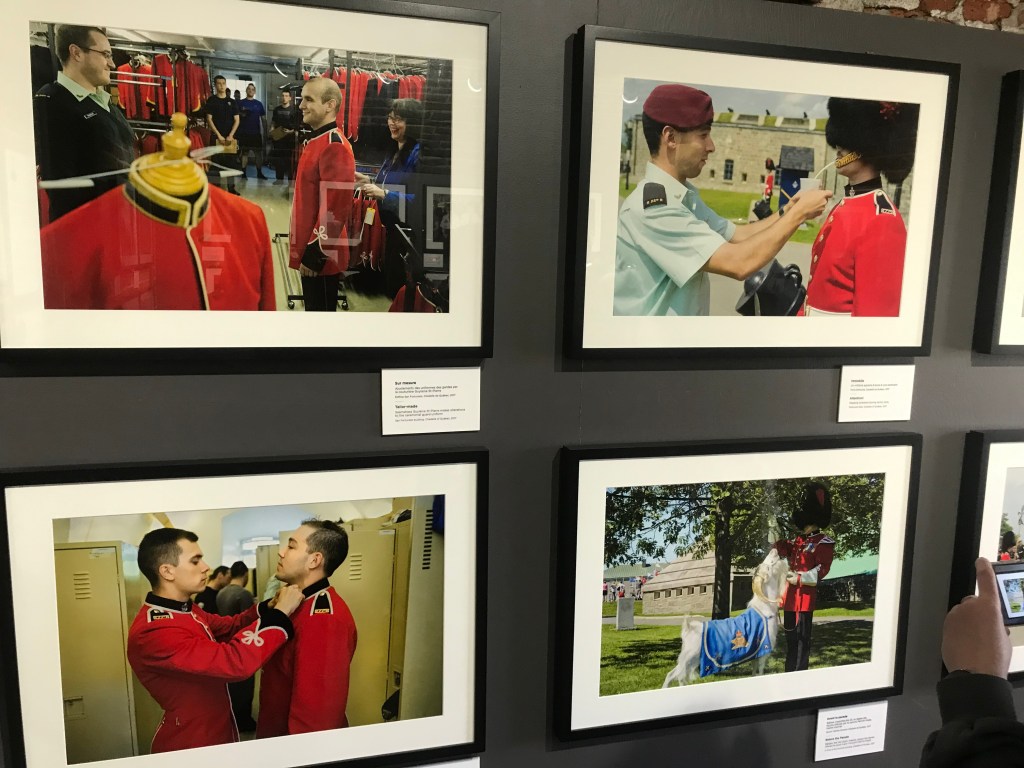
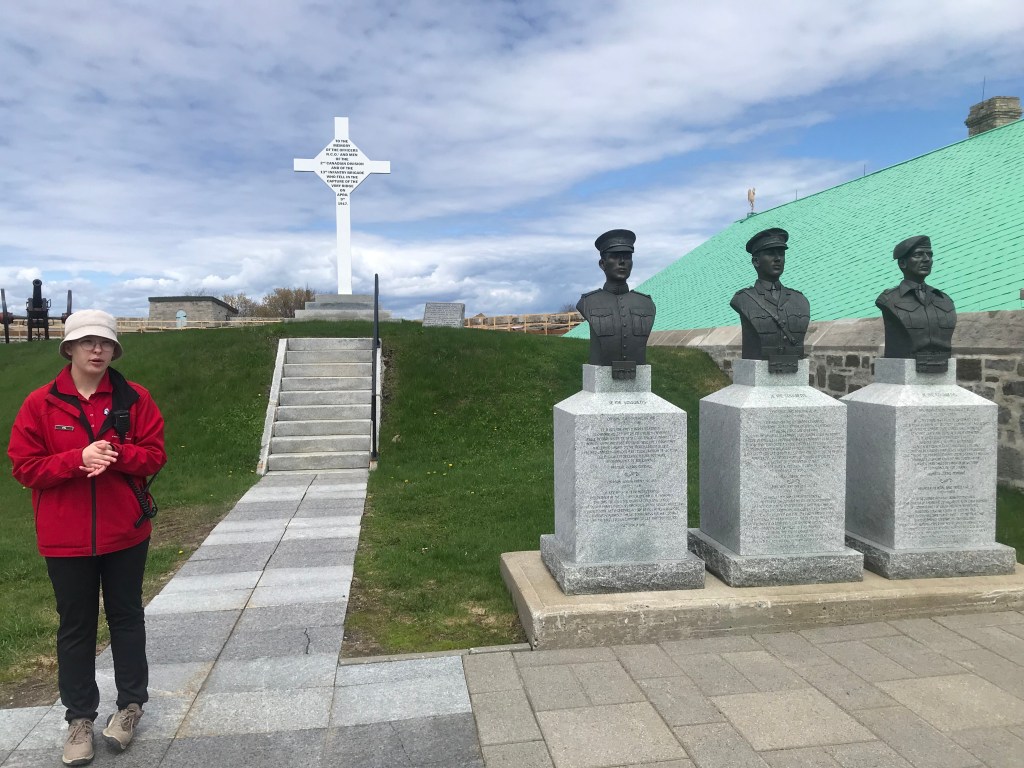
We finished at the Vimy Cross, where soldiers must salute as they pass to honour the fallen.
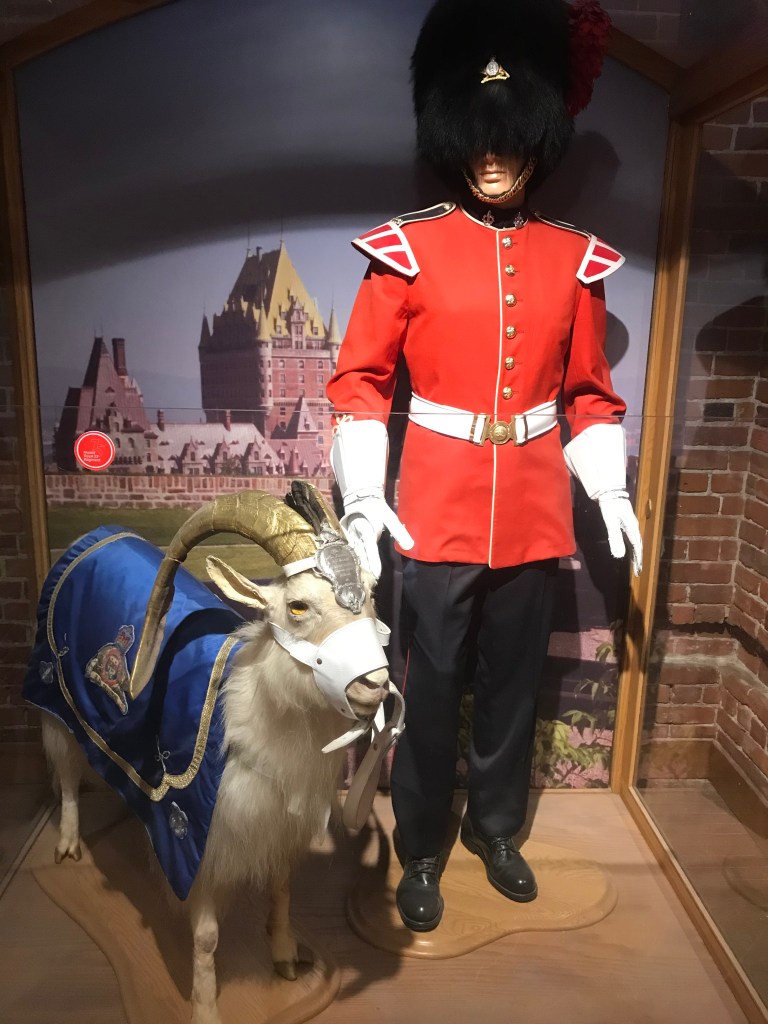
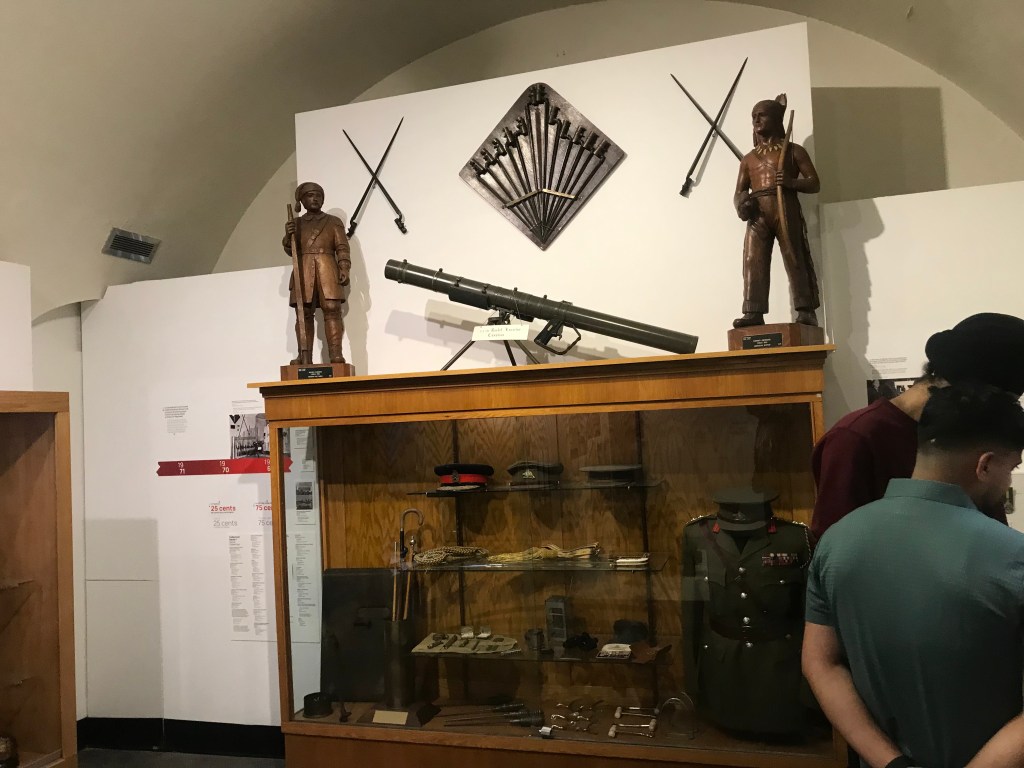
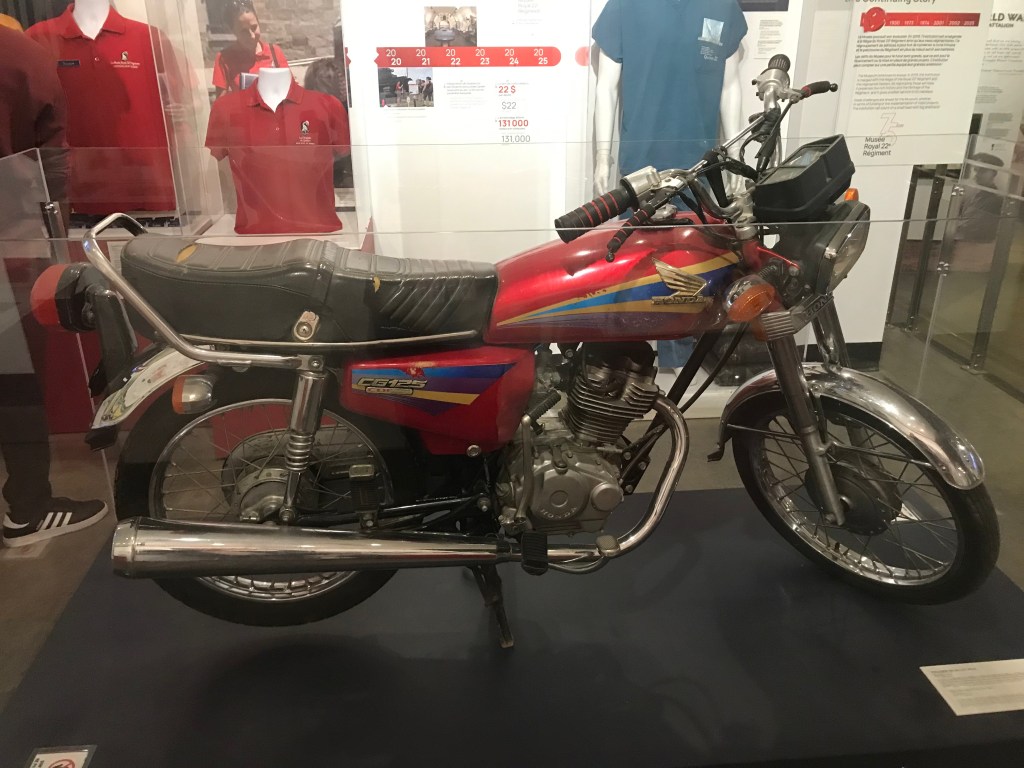
Once the tour finished, I had a brief look in the Citadelle Museum, showing off the Régiment’s roles in war and peacekeeping.
Going Down The Streets
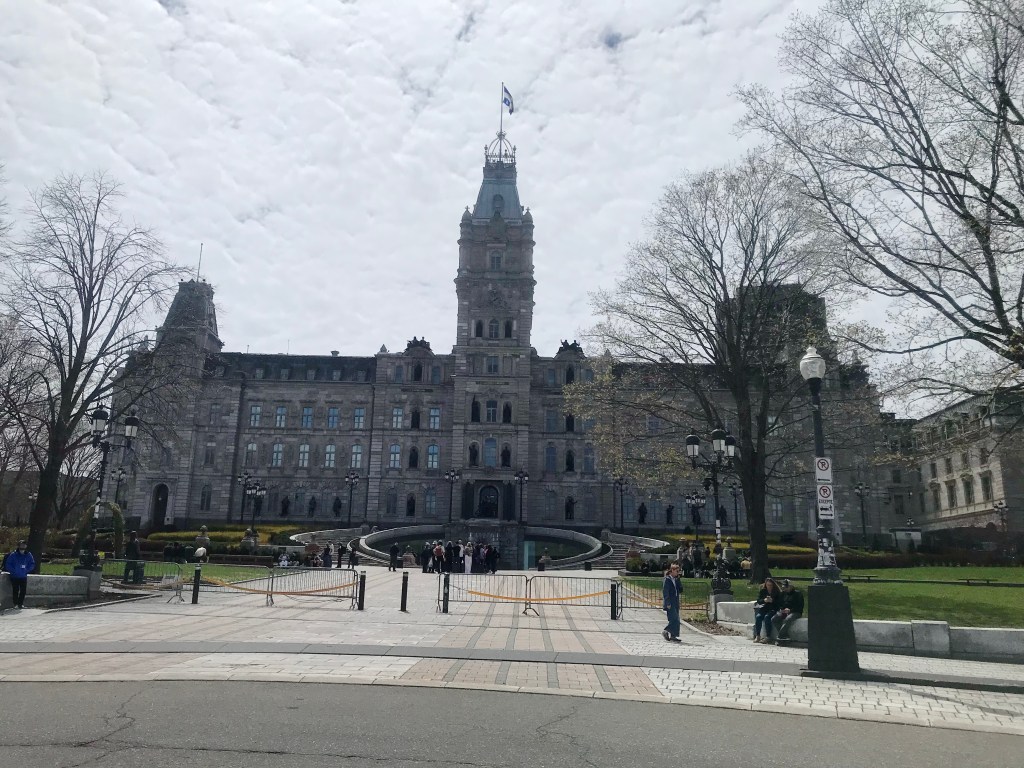
Back out from La Citadelle, I had a look at the Place de l’Assemblée Nationale, where the Quebec parliament meets.
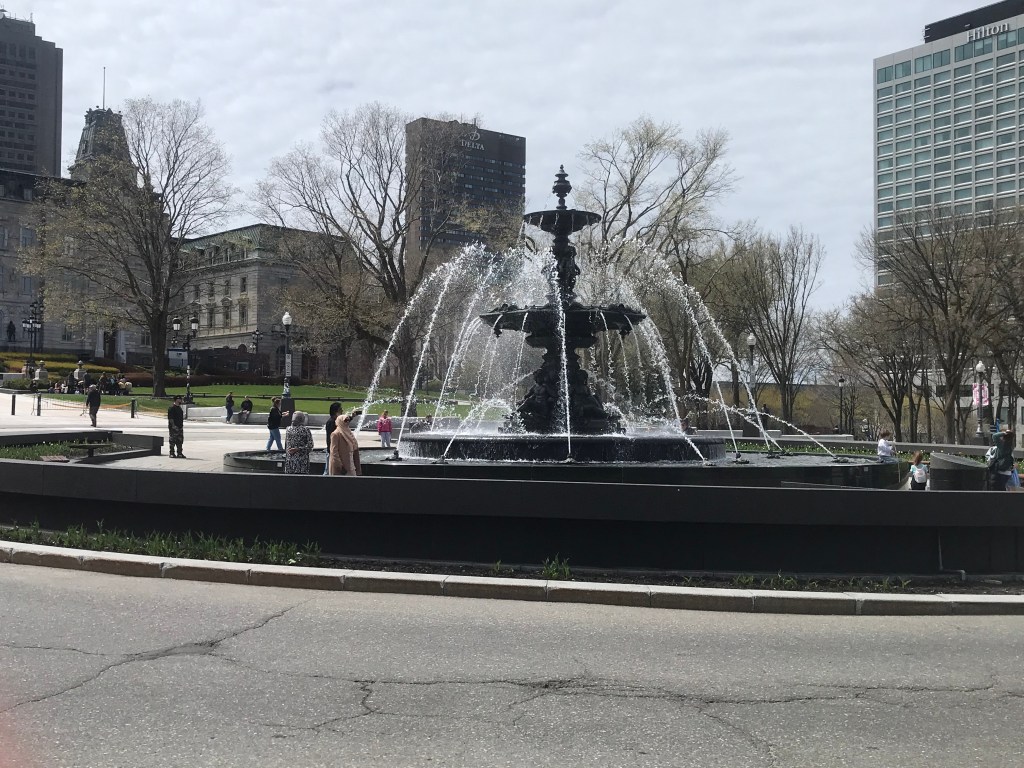
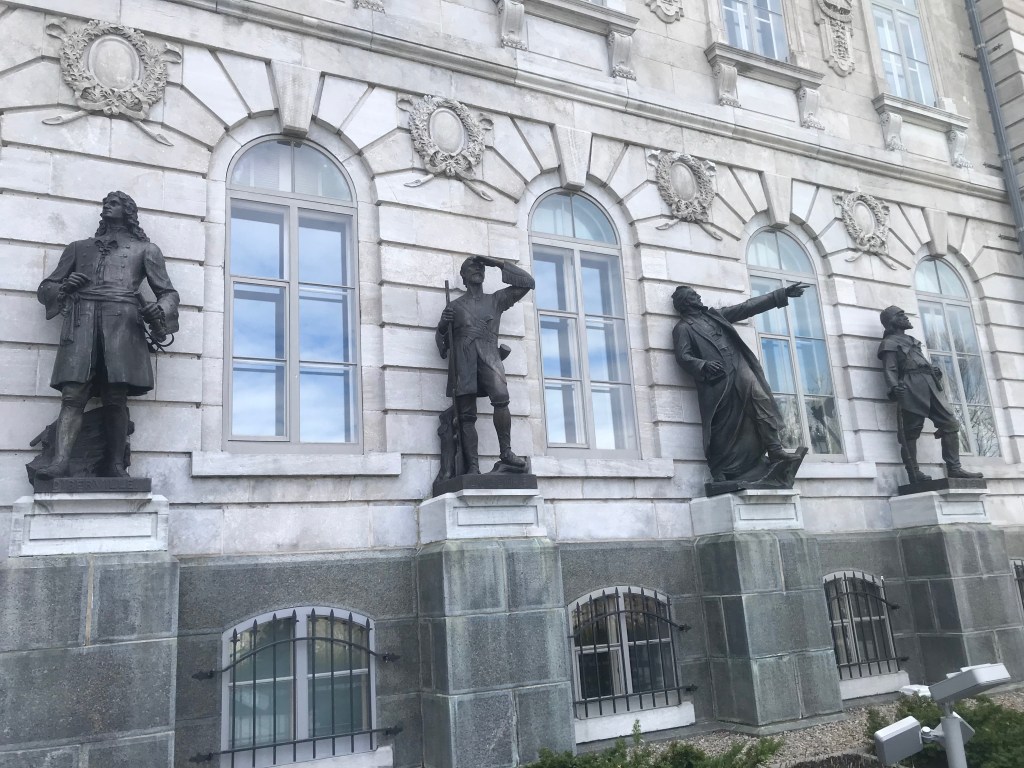
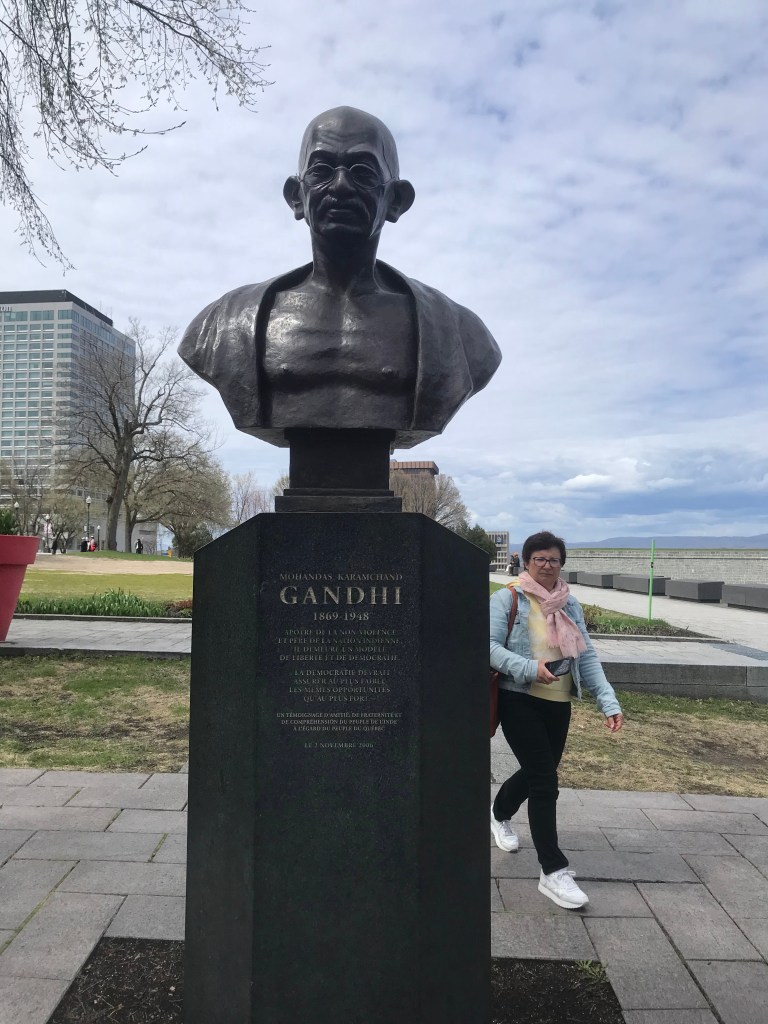
I wandered down back towards the Old City, still a bit slack-jawed at the buildings.
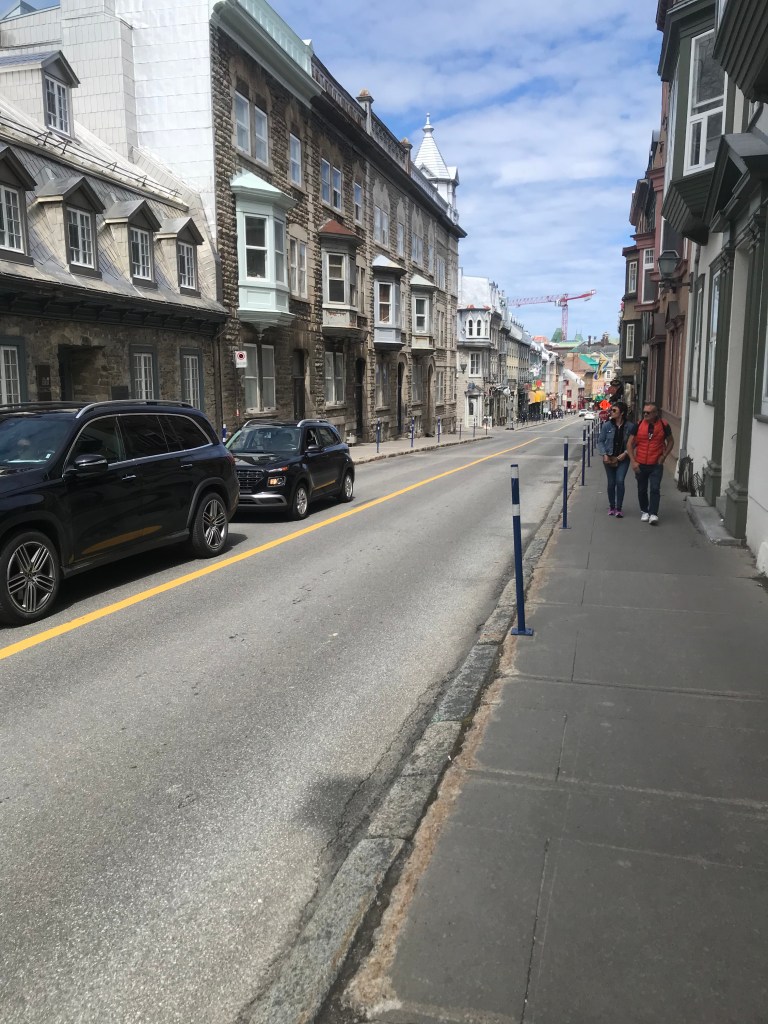
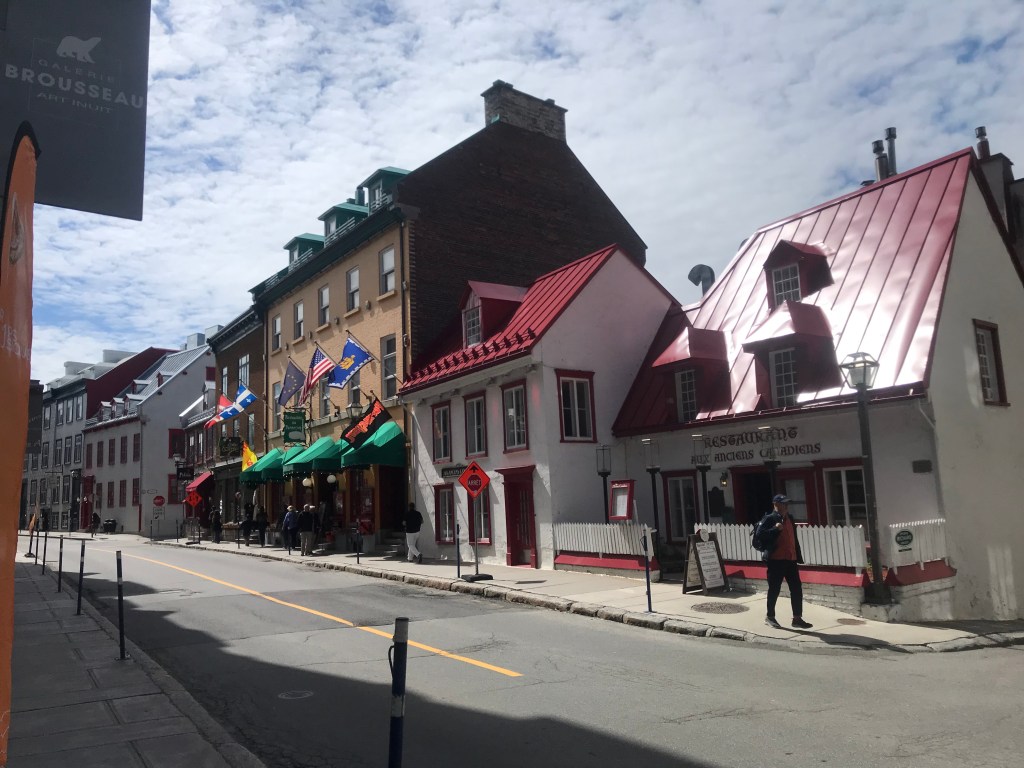
At a local eatery, I had some crépe with maple syrup and blueberries, along with a “20 ounce” glass of cider, which was slightly larger than a pint glass. (Glad I didn’t order the 30 ounce.)
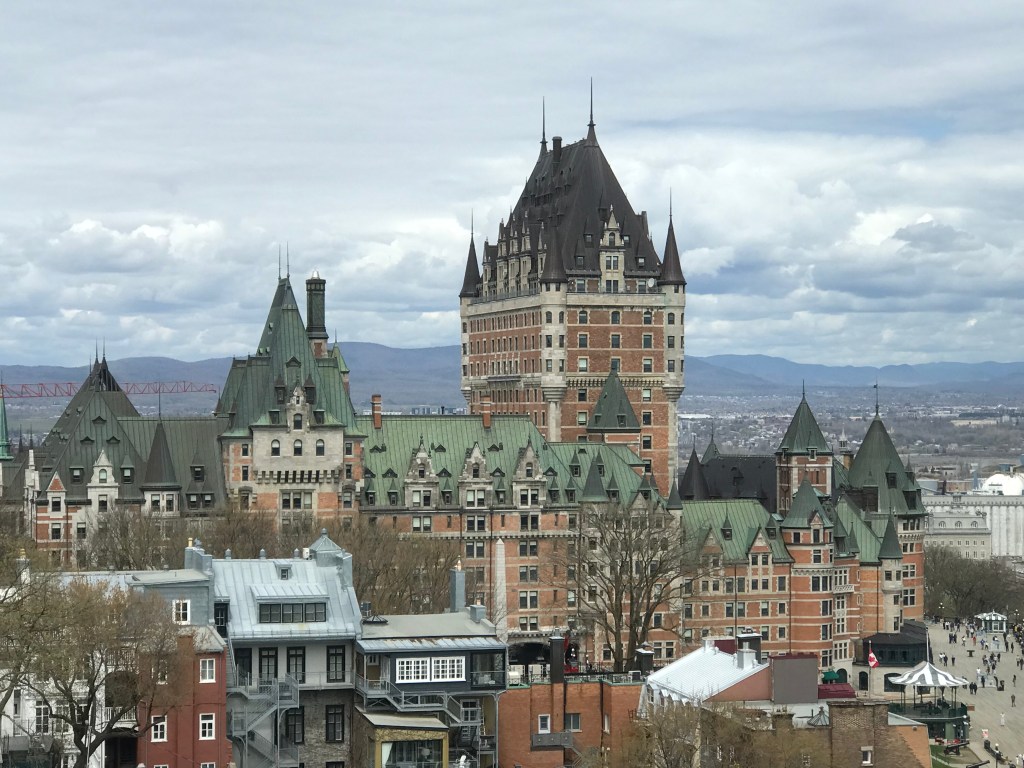
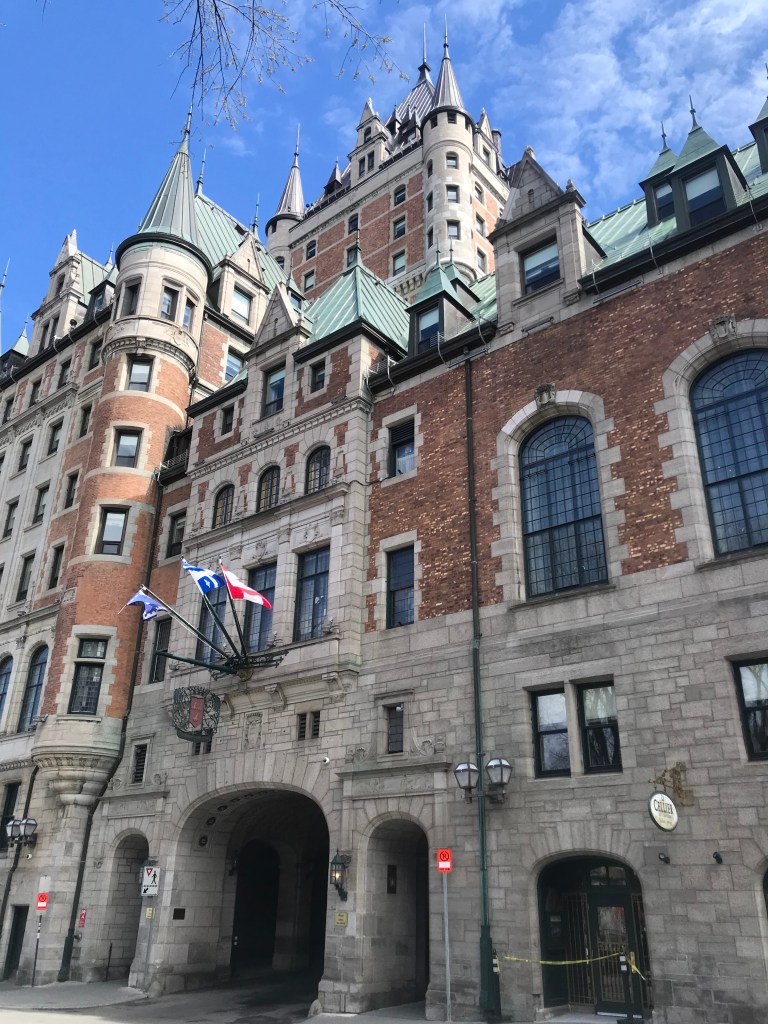
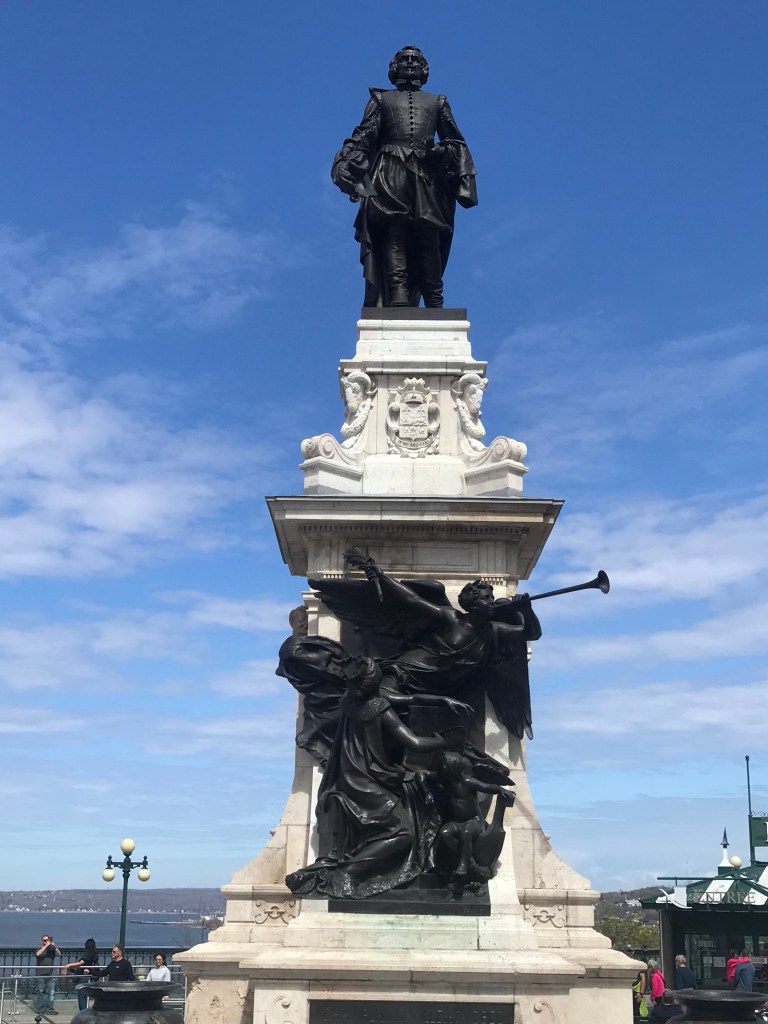
I ambled down Rue St-Louis, past the Château Frontenac and to the promenade overlooking the east side.
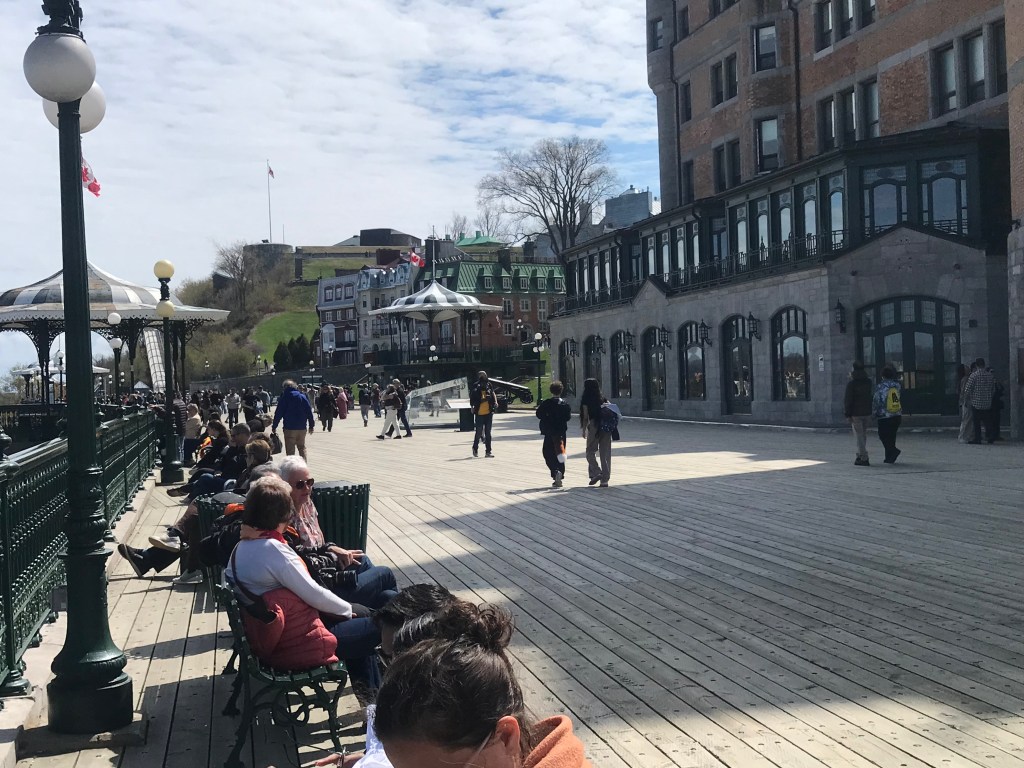
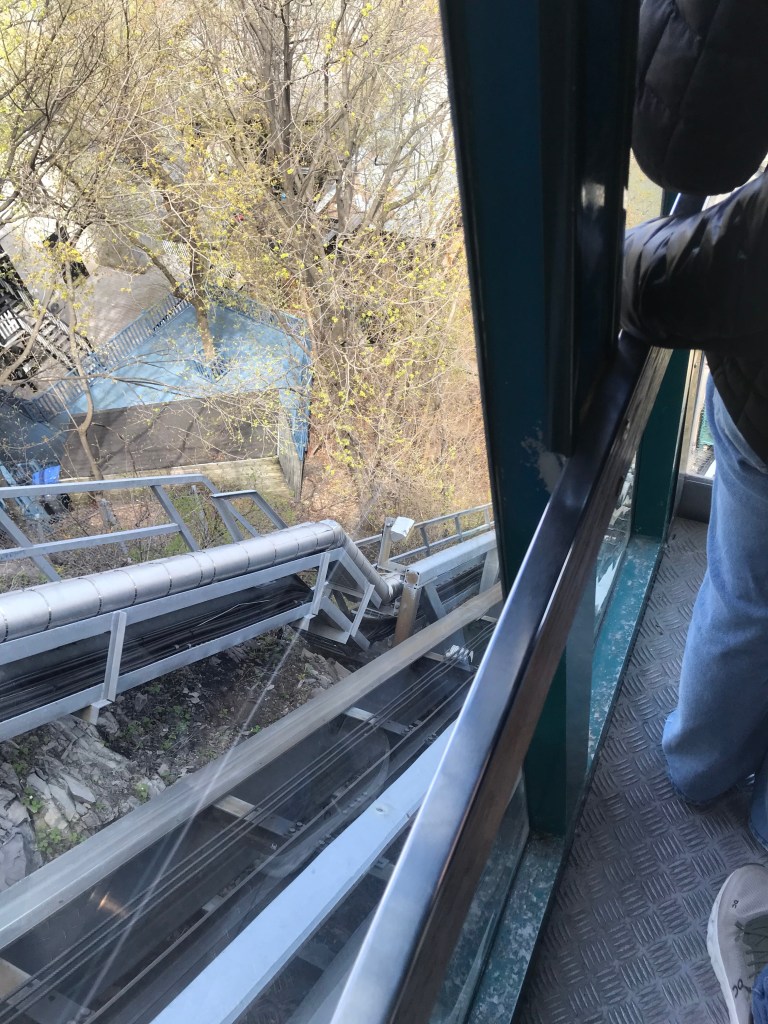
I took the Funicular, one of those railcars that move diagonally along hills, down to the lower level. (Shades of Akira.)
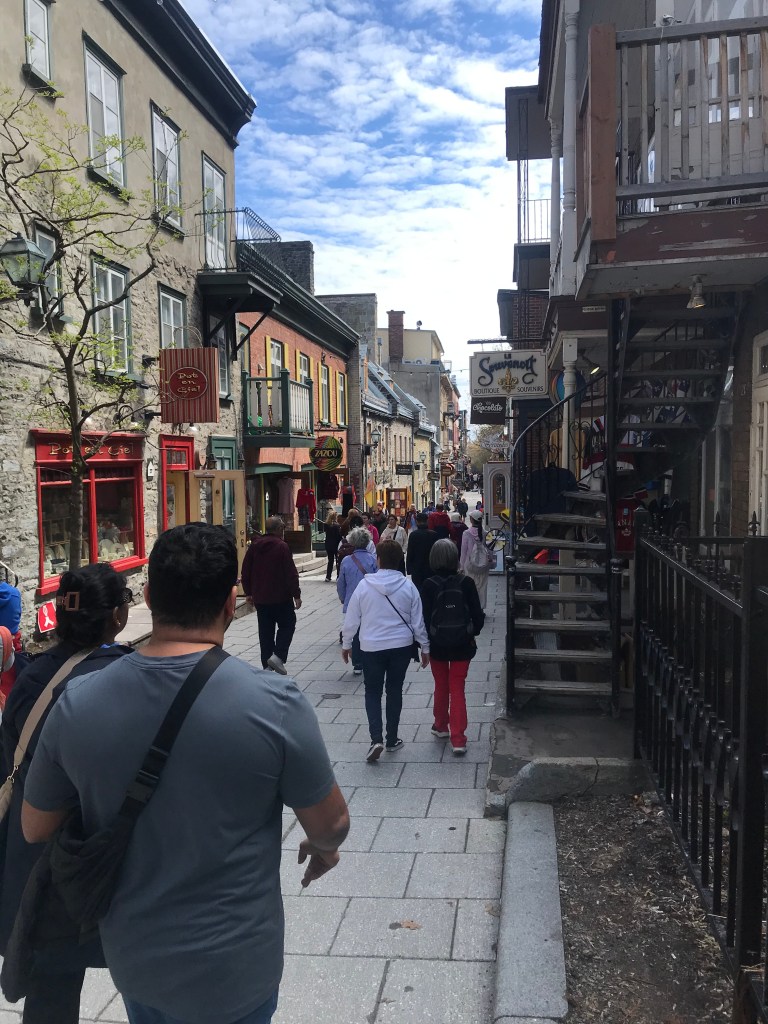
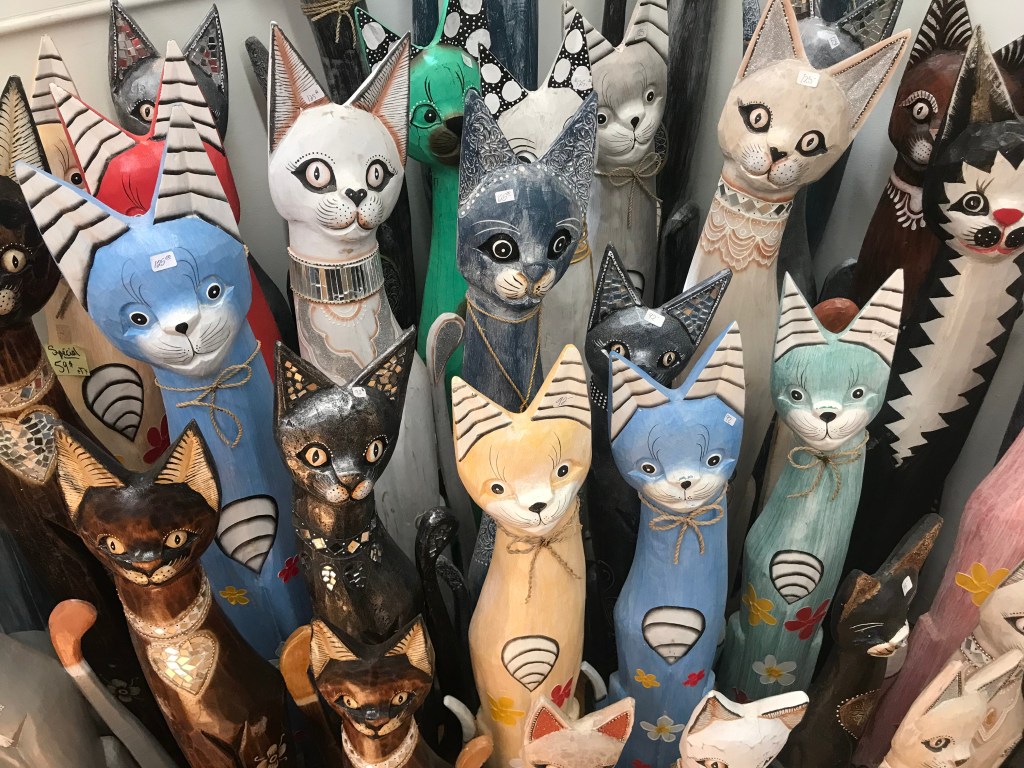
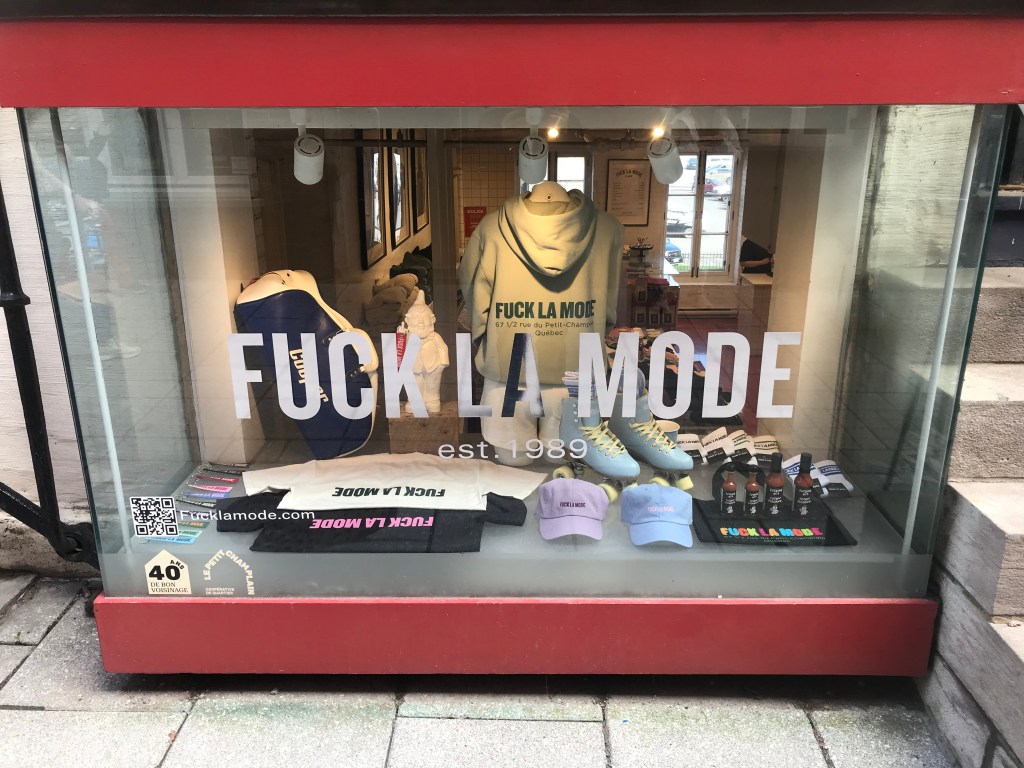
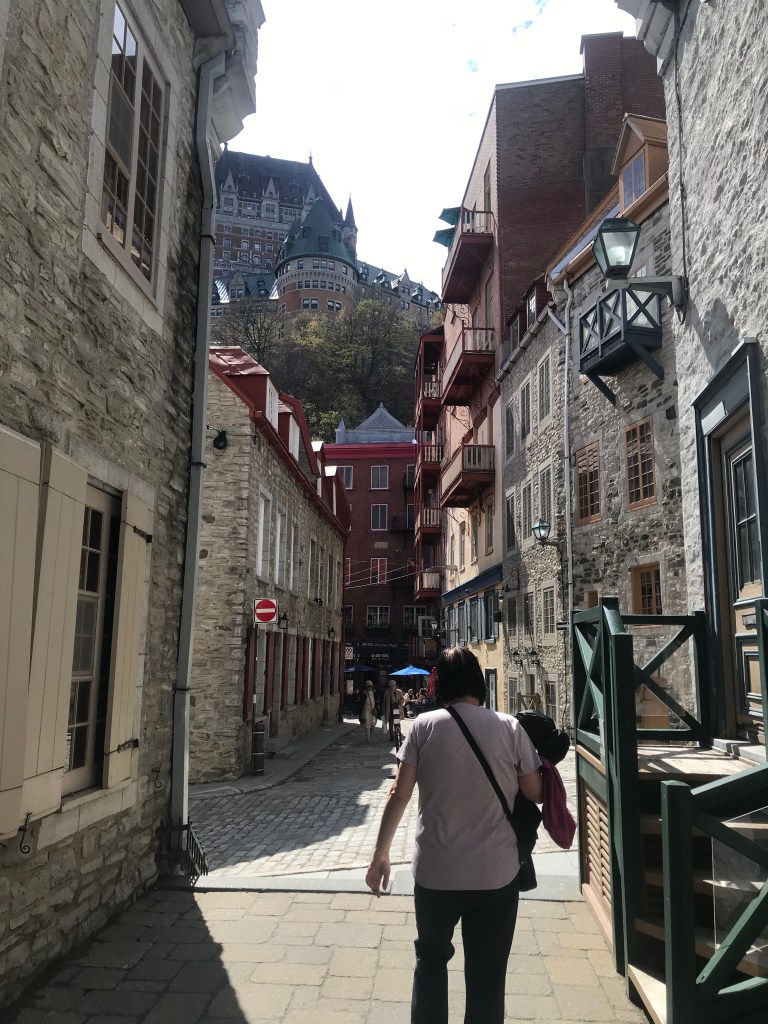
This area, Quartier Petit-Champlain, was a bit more touristy, but still impressive, with some buildings 300 years old.
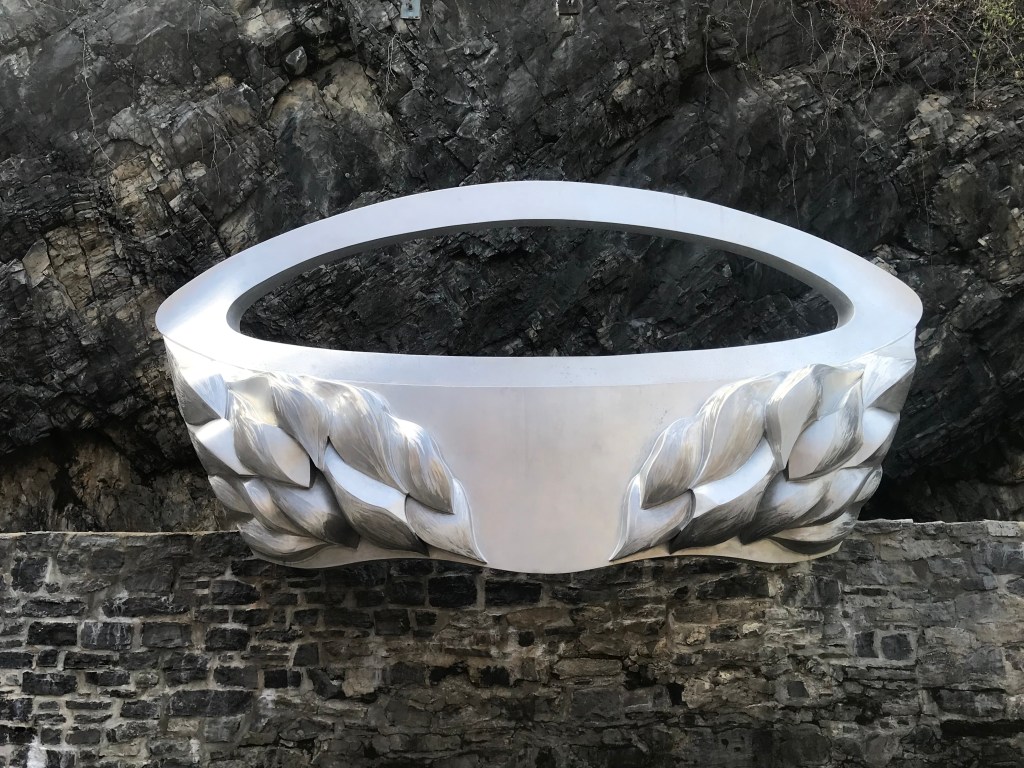
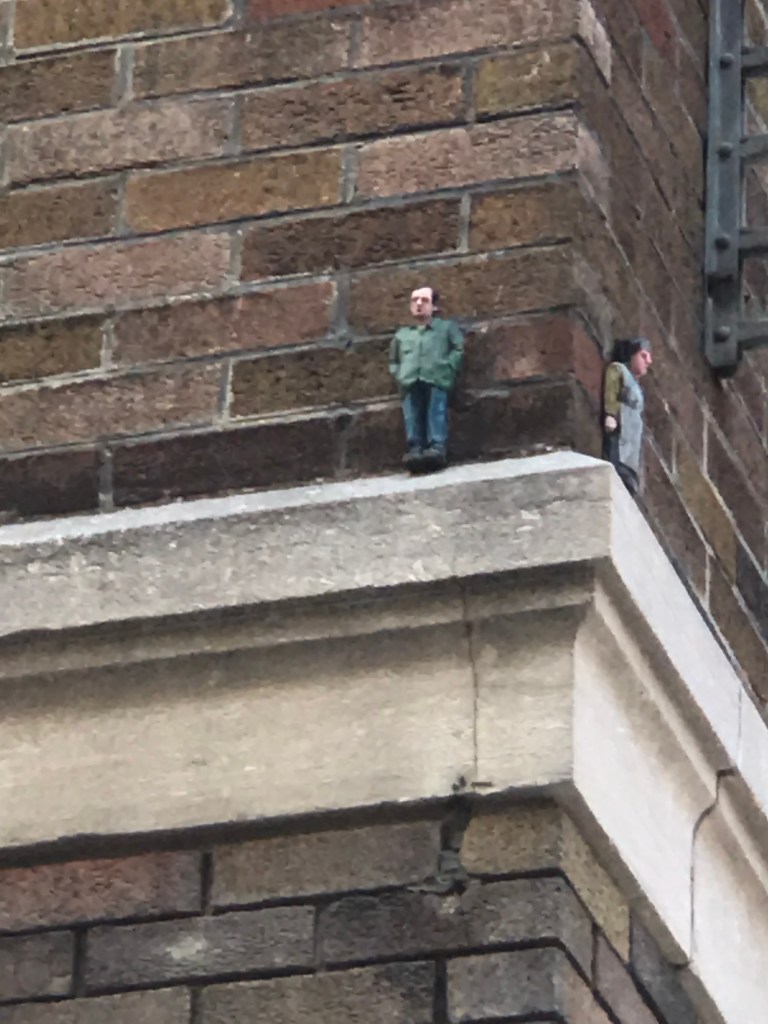
headed north in the shadow of Cap-Diamant, and the architecture began to modernise; art galleries and antique shops began to predominate. In this area, along Rue Dalhousie, you can hunt for tiny figures placed by various windows.
Unfortunately, Quebec is no better blessed in public toilets than Vancouver is and I was now in fair need. I walked fairly quickly back to Gare du Palais and used theirs, then found another further on near a public library.
With tired legs and feeling historied out, I caught the bus home. Back at the hostel, the other guests were preparing dinner and chatting away in French. When one asked where I was from and I replied “Nouvelle Zealand”, she immediately tried to do a haka, so yeah, that’s what we’re known for.


Leave a Reply