May 5: Having a swinging time
Away to the city centre early this morning, because I’d booked to go to Capilano Suspension Bridge Park. I caught the shuttle bus at Canada Place and we crossed rather slowly against morning traffic over Lions Gate Bridge into North Vancouver.
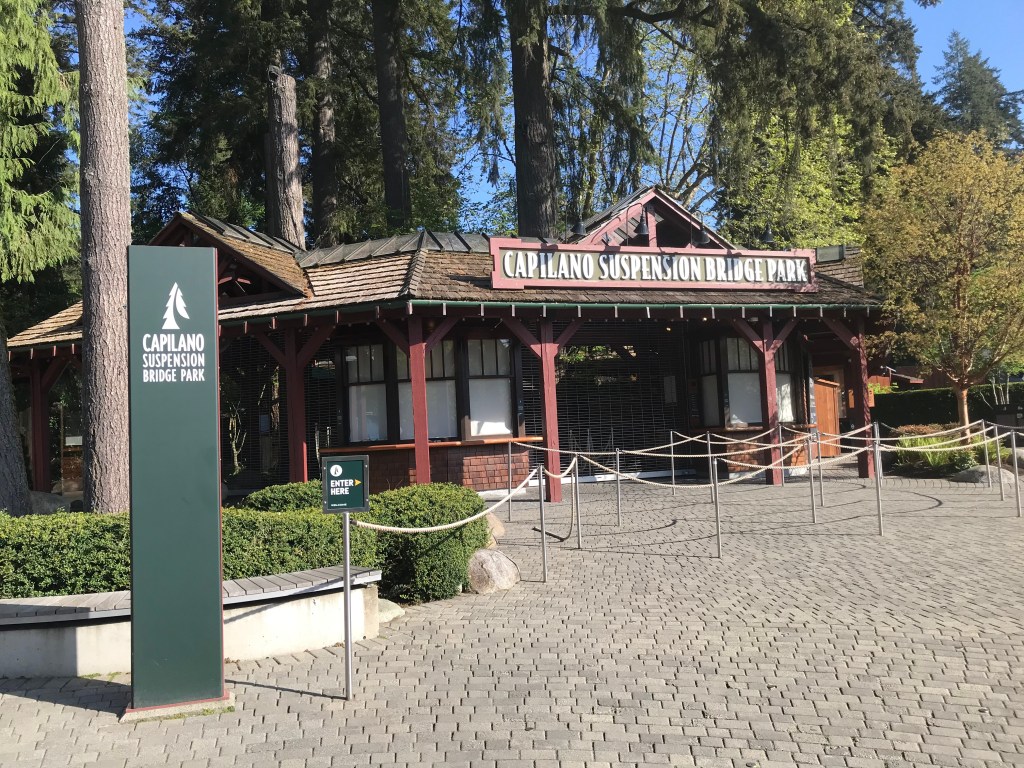
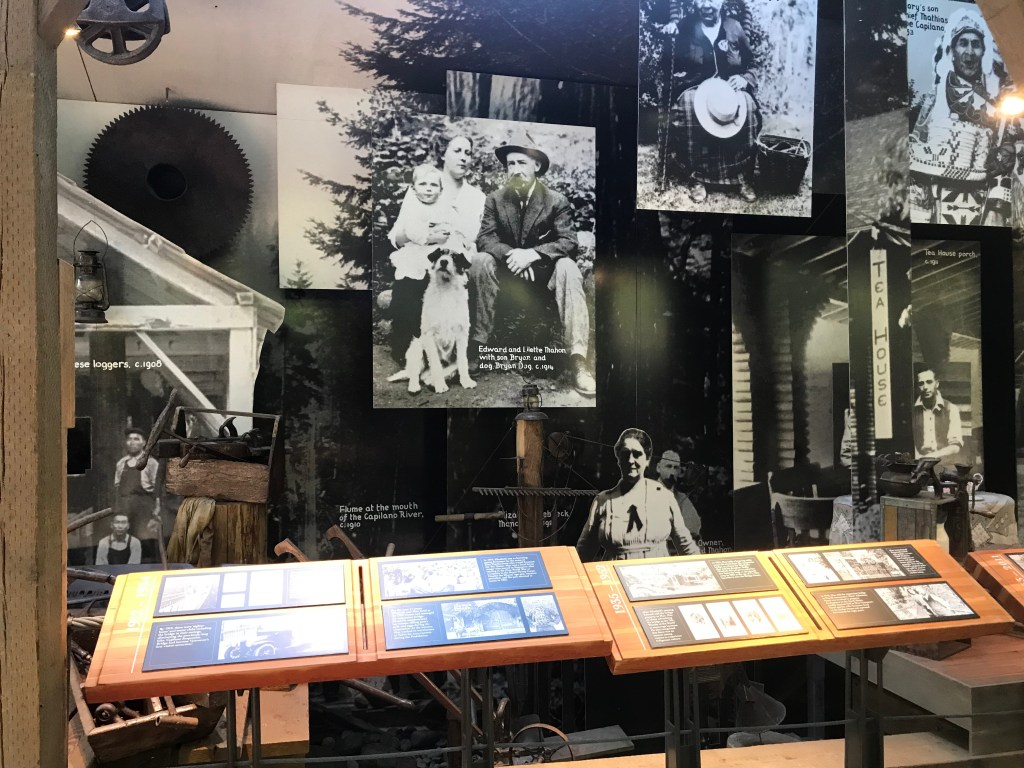
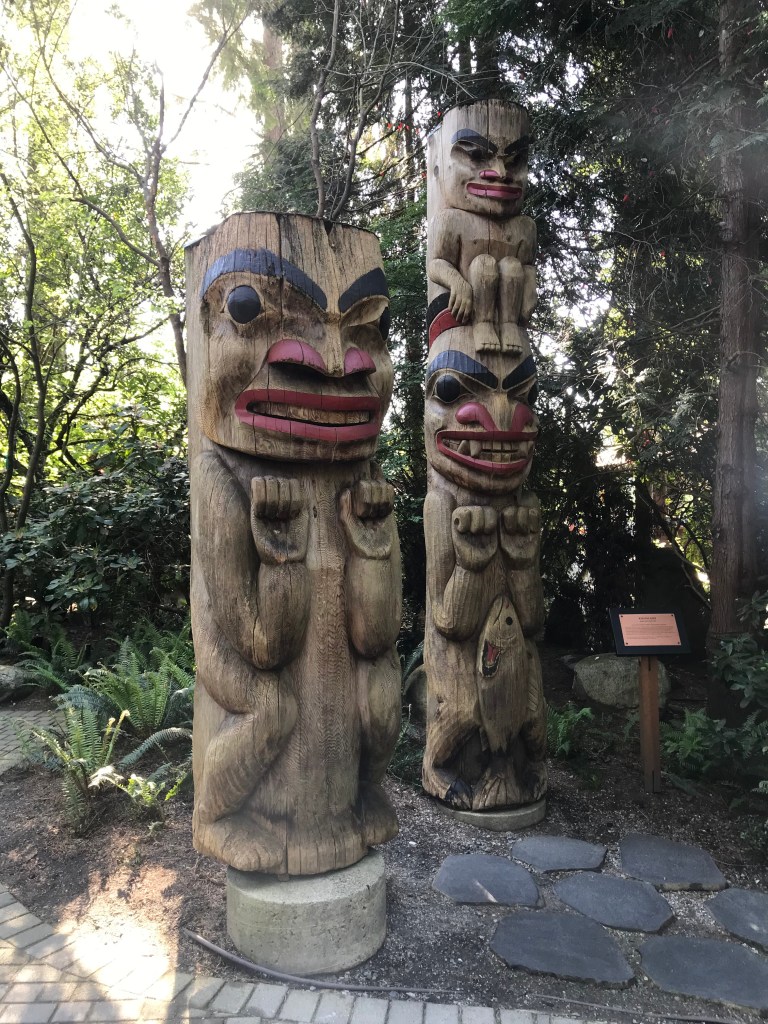
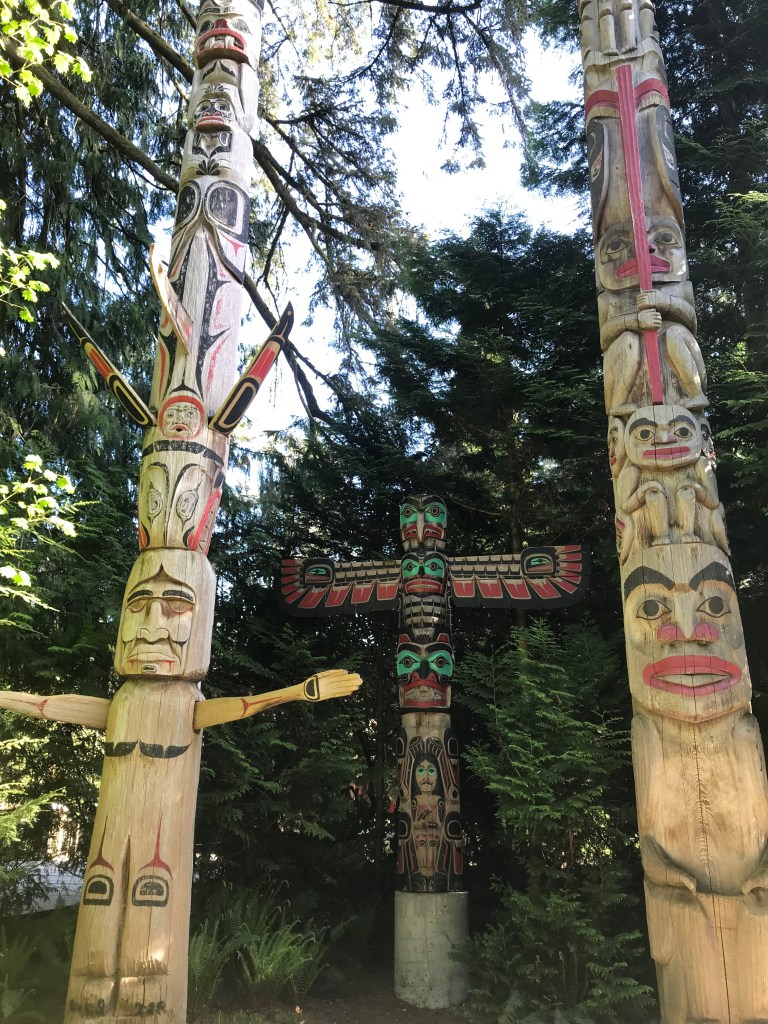
First built in 1889, and later further developed in the 1980s, the bridge takes you over the Capilano River and into a section of pristine British Columbian rainforest. Before getting to the bridge, there were displays about its history, and several carvings and story poles made by the local Skwxwú7mesh and Tsleil-Waututh peoples.
And then onto the swaying, rocking bridge itself.
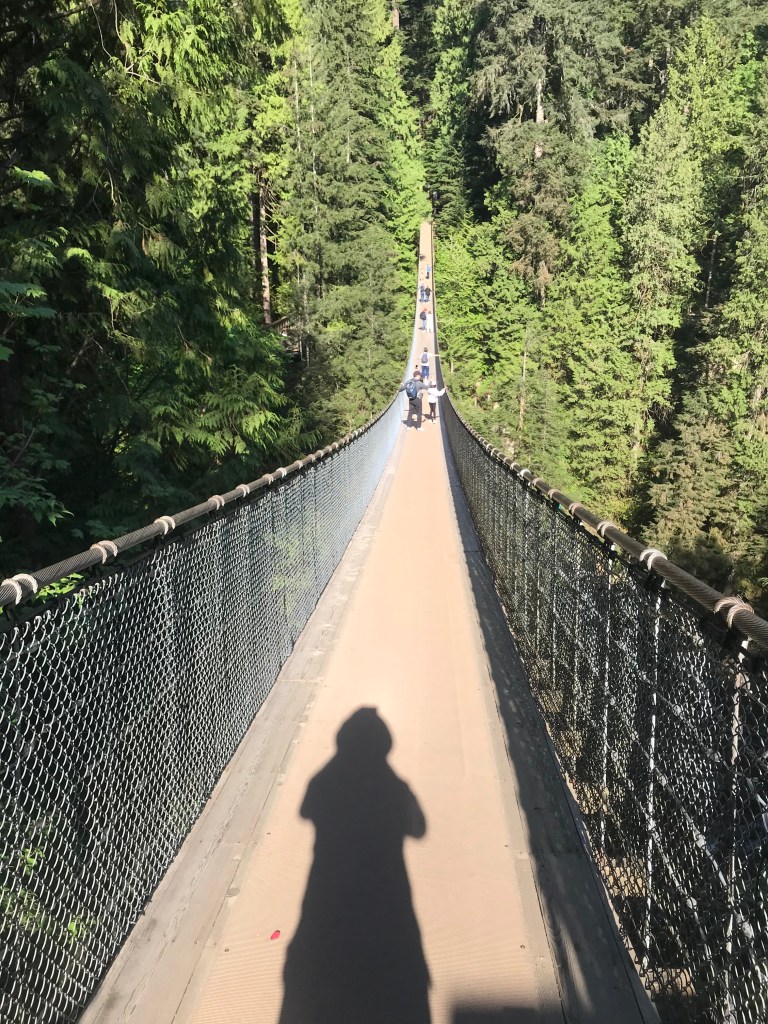
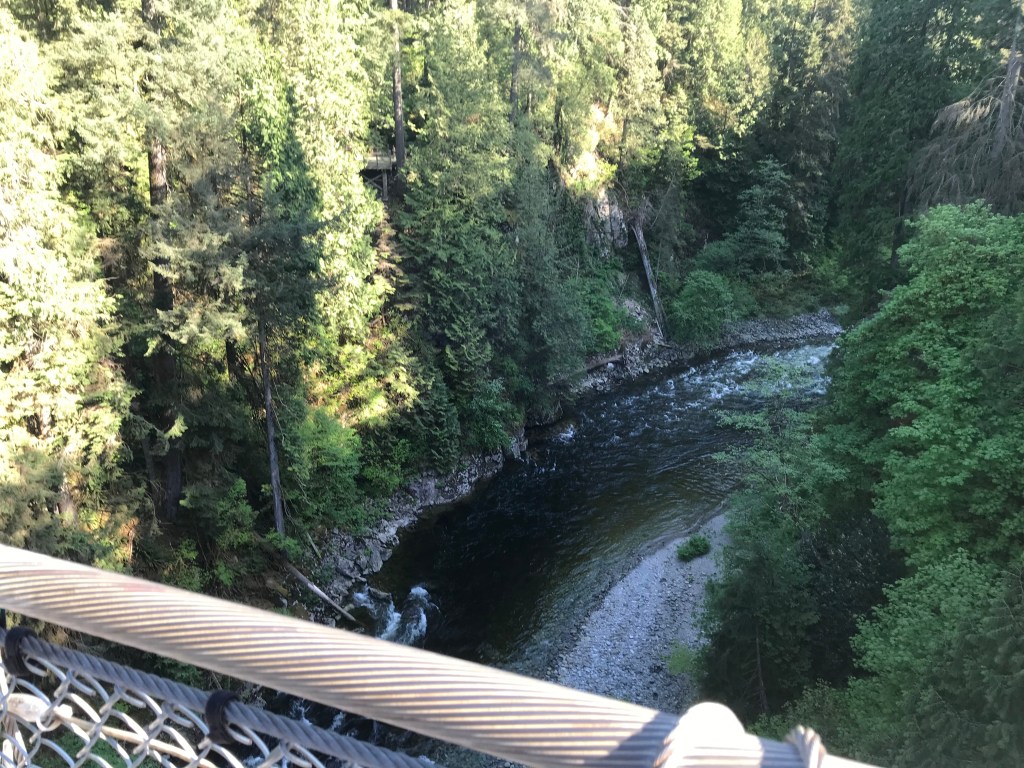
Once across, you can choose three different walkways, each showing different aspects of the rainforest.
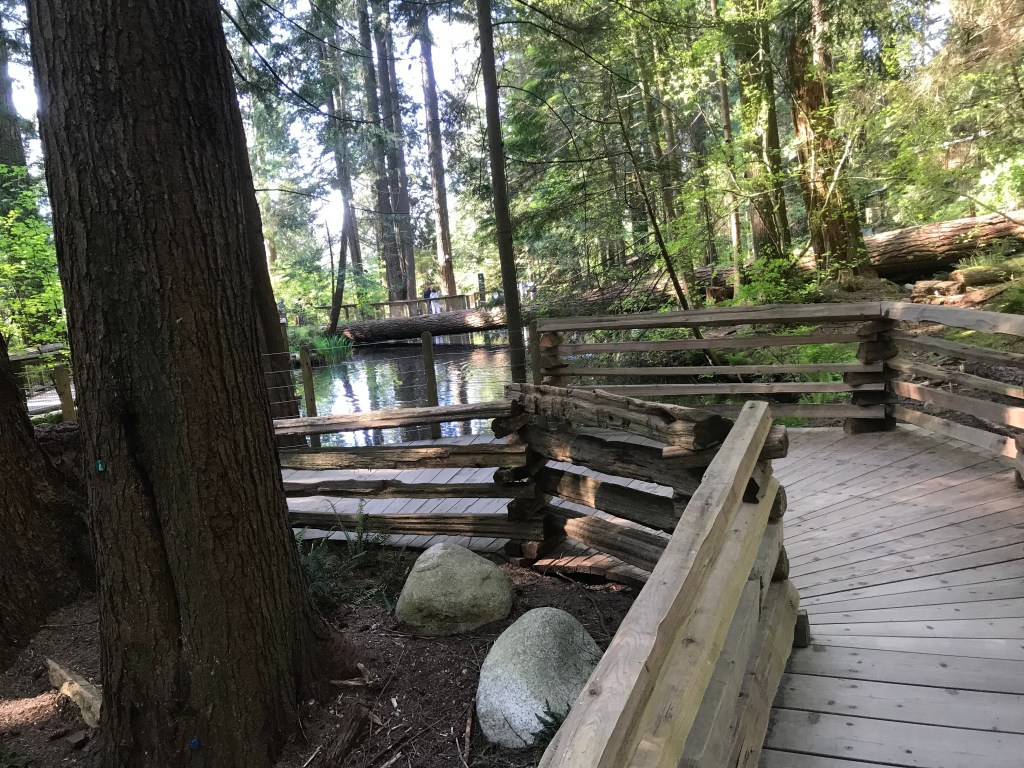
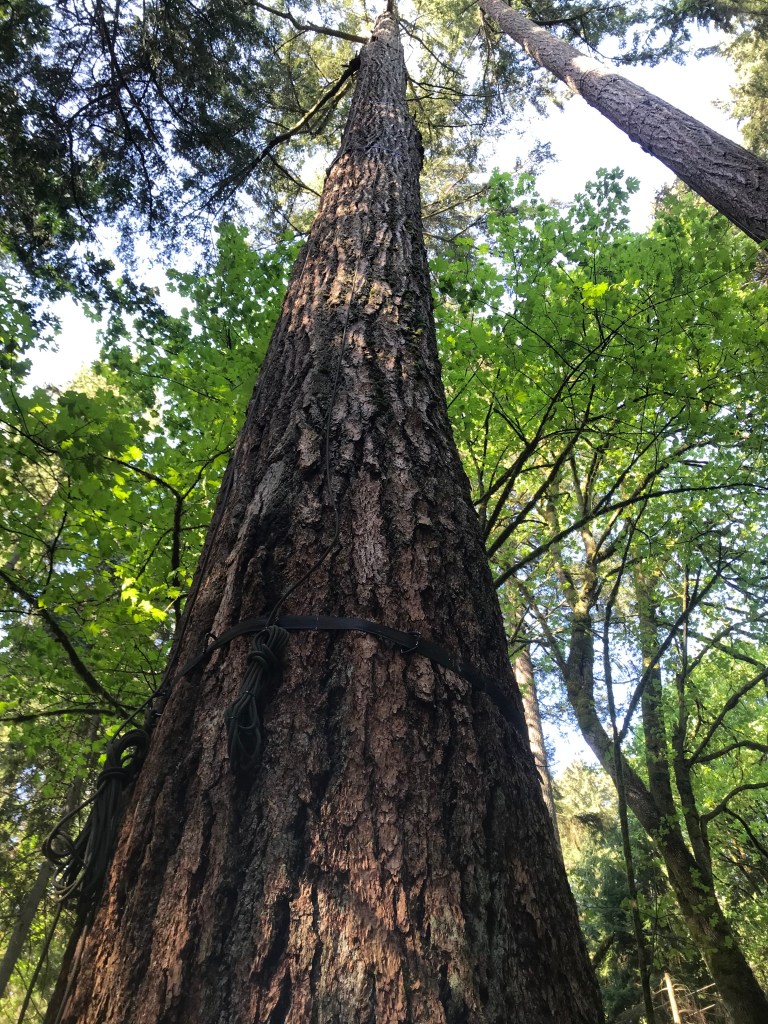
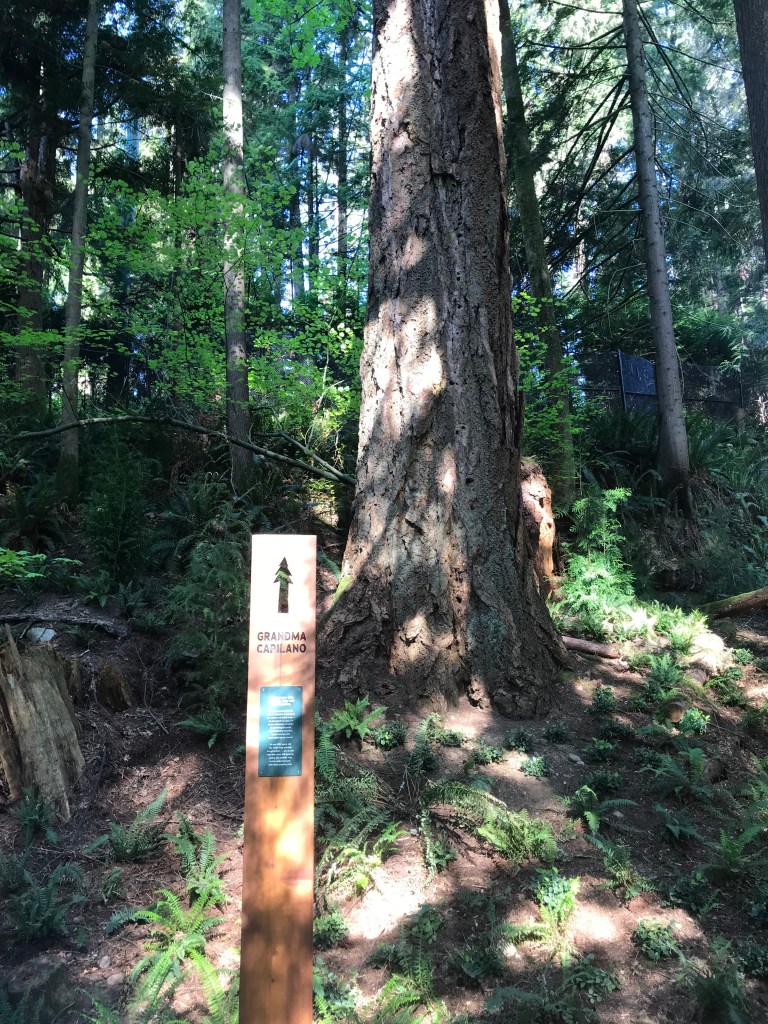
Surrounded by these towering Douglas-firs, cedars and yellow hemlocks, you become very aware that you’re no longer in Australia or New Zealand. It’s a very beautiful sight.
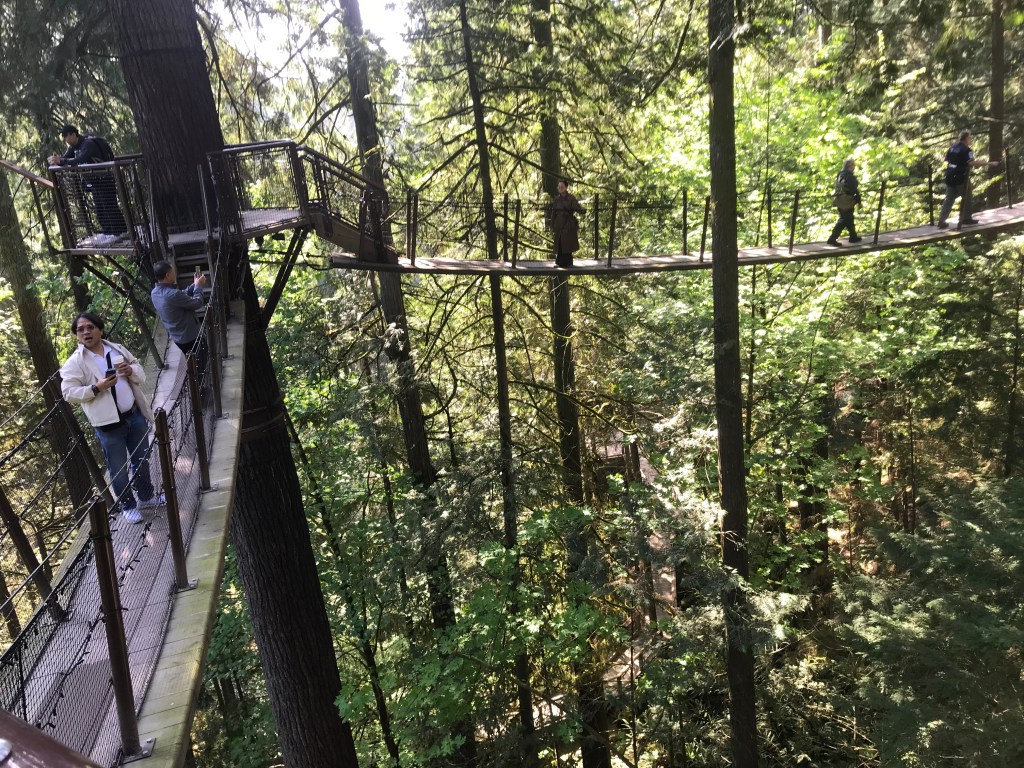
The Tree Walk lets you walk higher among the canopy.
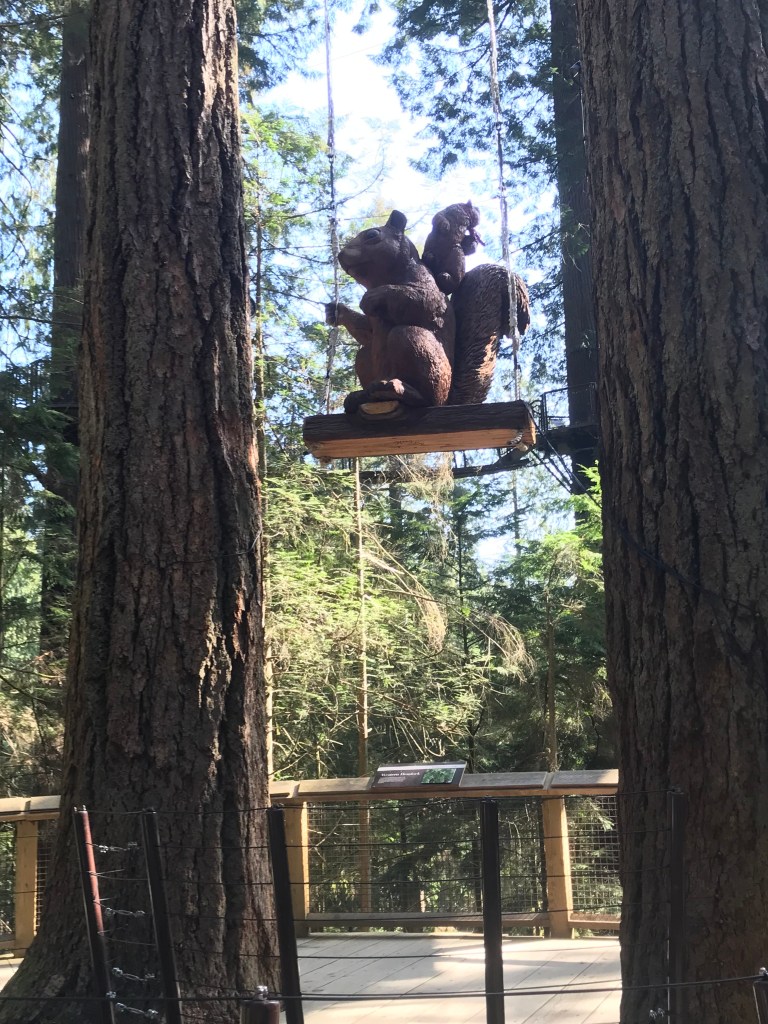
The guide said we might see squirrels, but the only one I saw was the big one sitting on the swing.
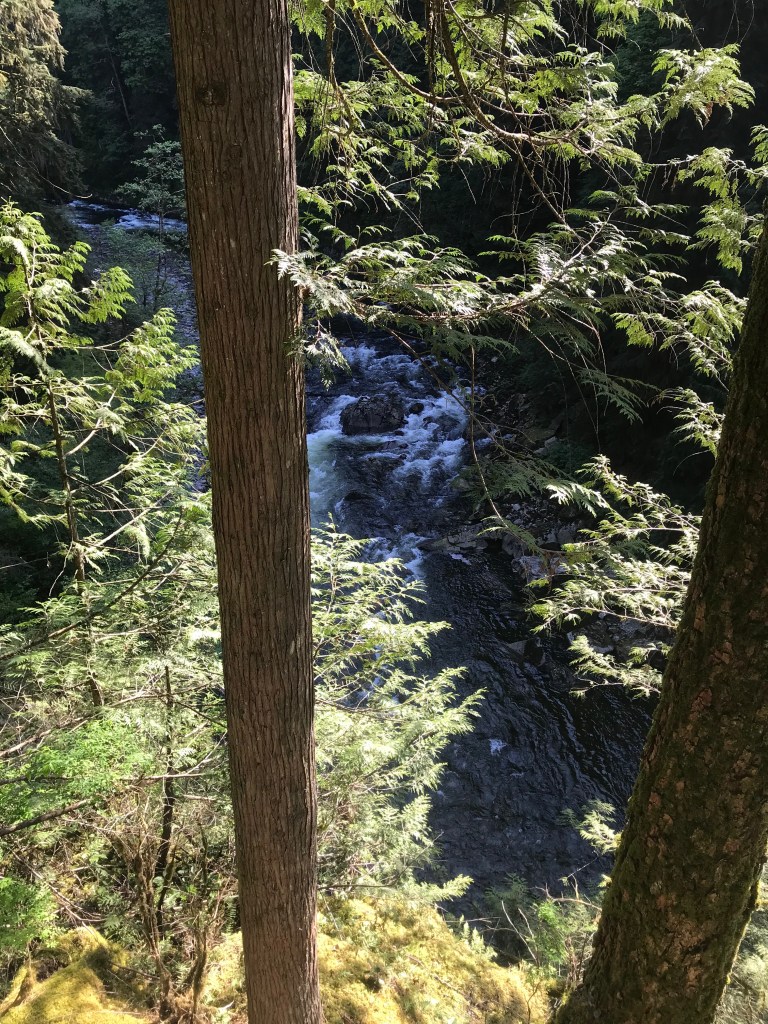
Another path let you look over the river far below.
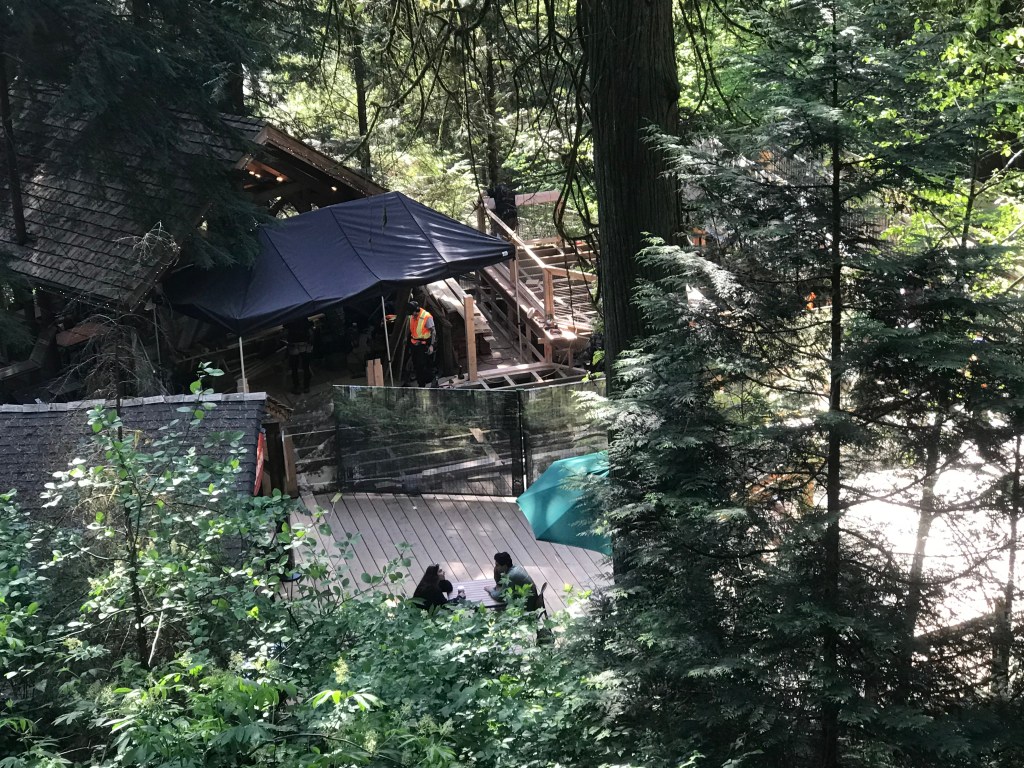
I noticed too the practical aspect of keeping a park like this running.
A stranger thing I noticed was that people had tossed coins into a few brooks and streams in the forest. Not sure what wish they expect to get.
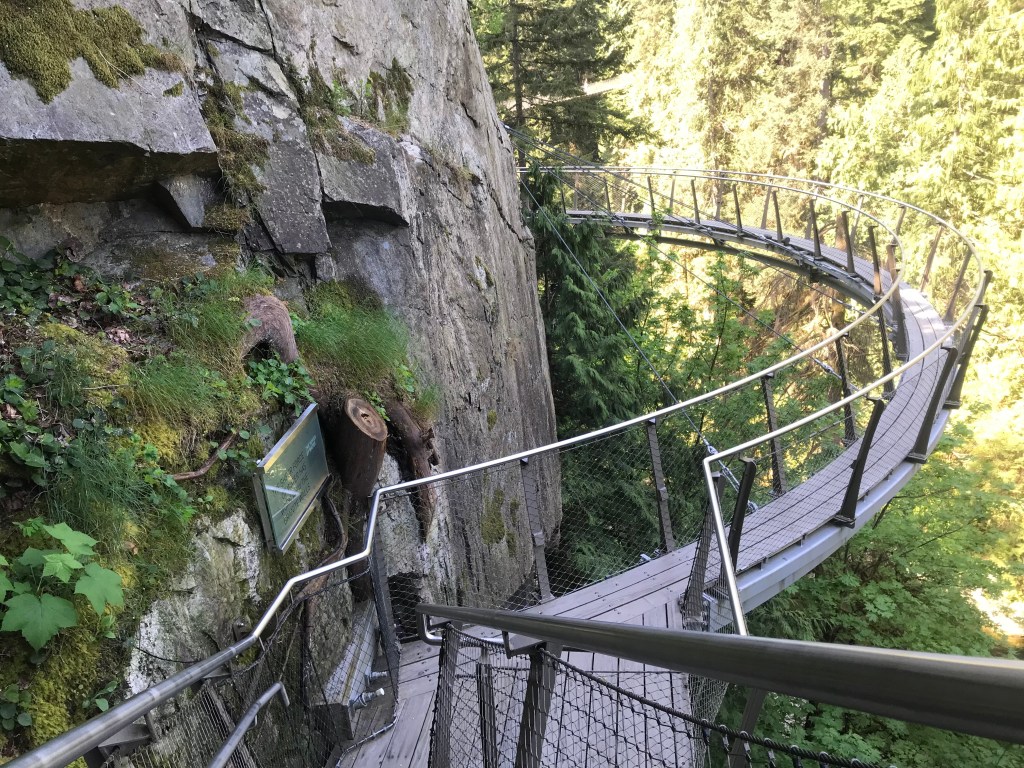
Back over the bridge, against the influx of later arrivals (it pays to be early) and on to the next section: the Cliffwalk. This is a steel walk that runs alongside the sheer cliff face next to the river. As you go through it taking in the stunning view, it shows information panels about erosion, lichens, and how much water Canadians use in their washing machines (true).
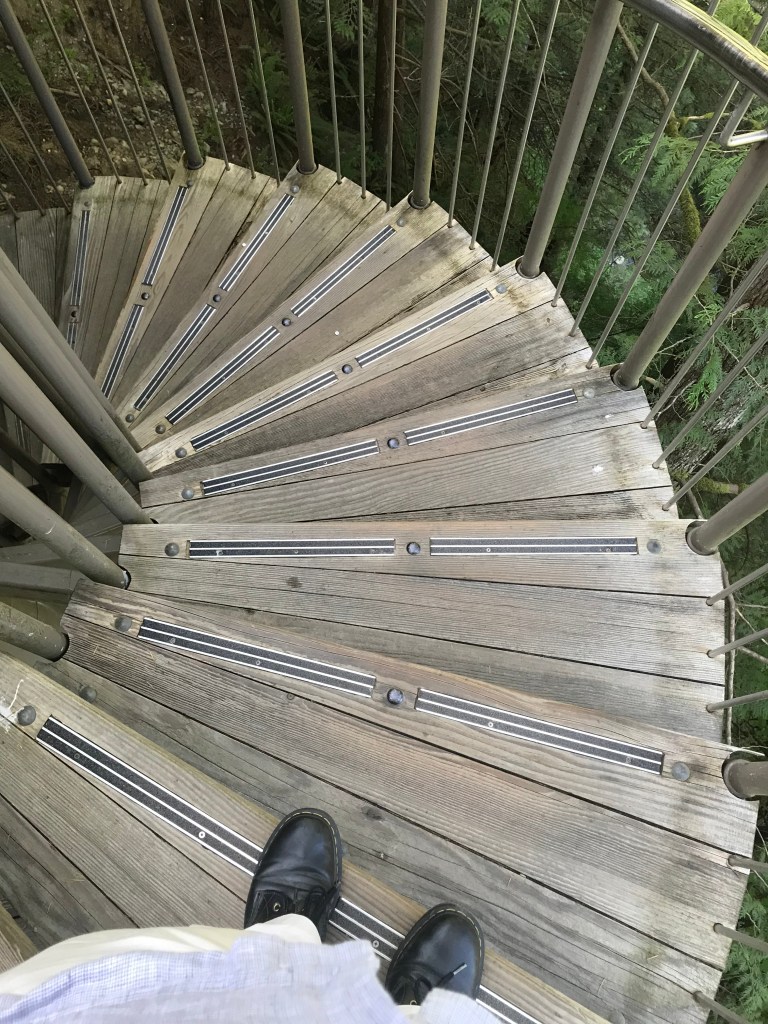
After so many steps, I had a bite to eat at the centre gift shop and bought a little merch.
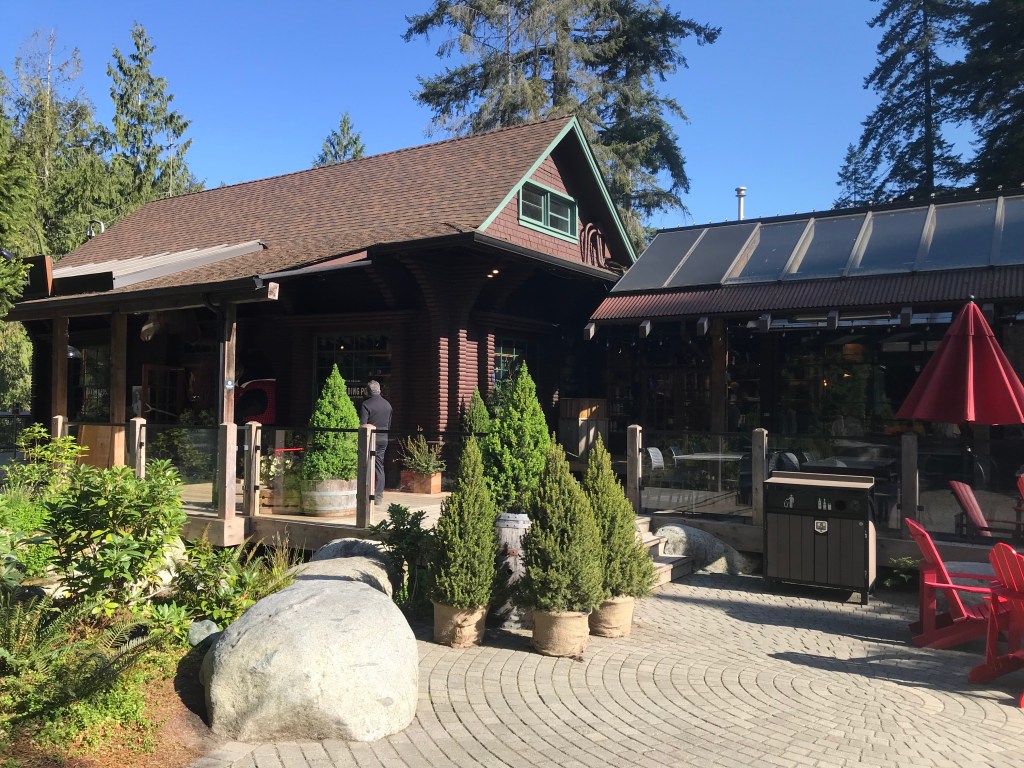
Wood you believe it?
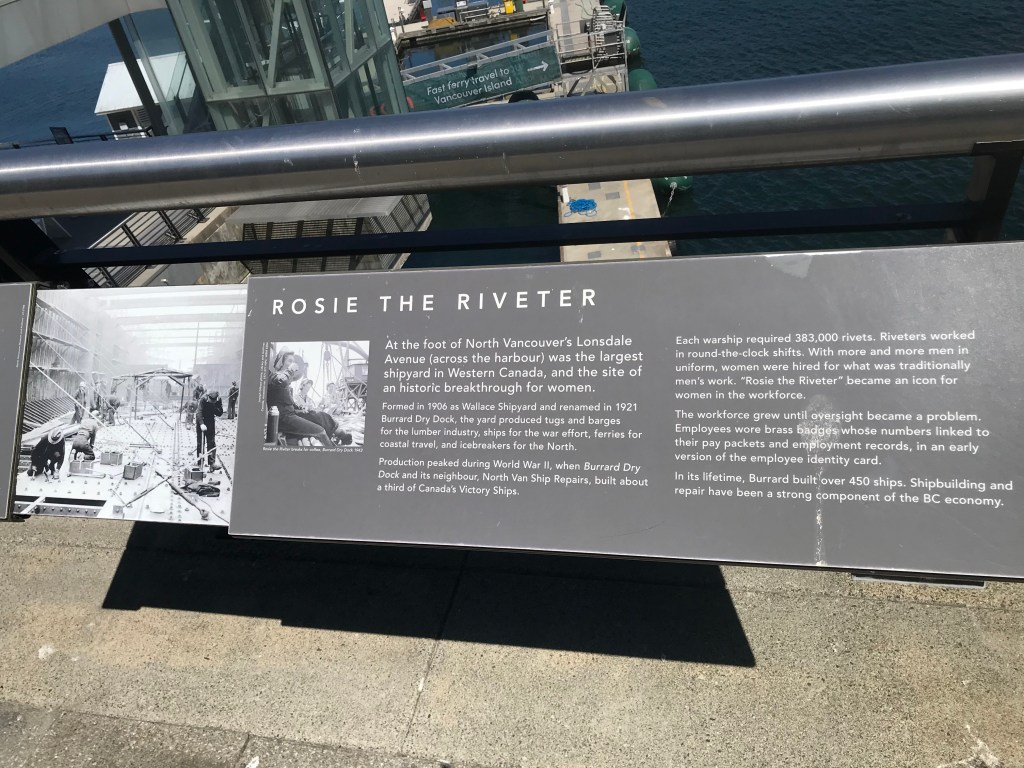
After the shuttle dropped me back, I walked along the harbour for a while, taking in the view and reading the information panels placed periodically on the fence about little-known aspects of British Columbia history.
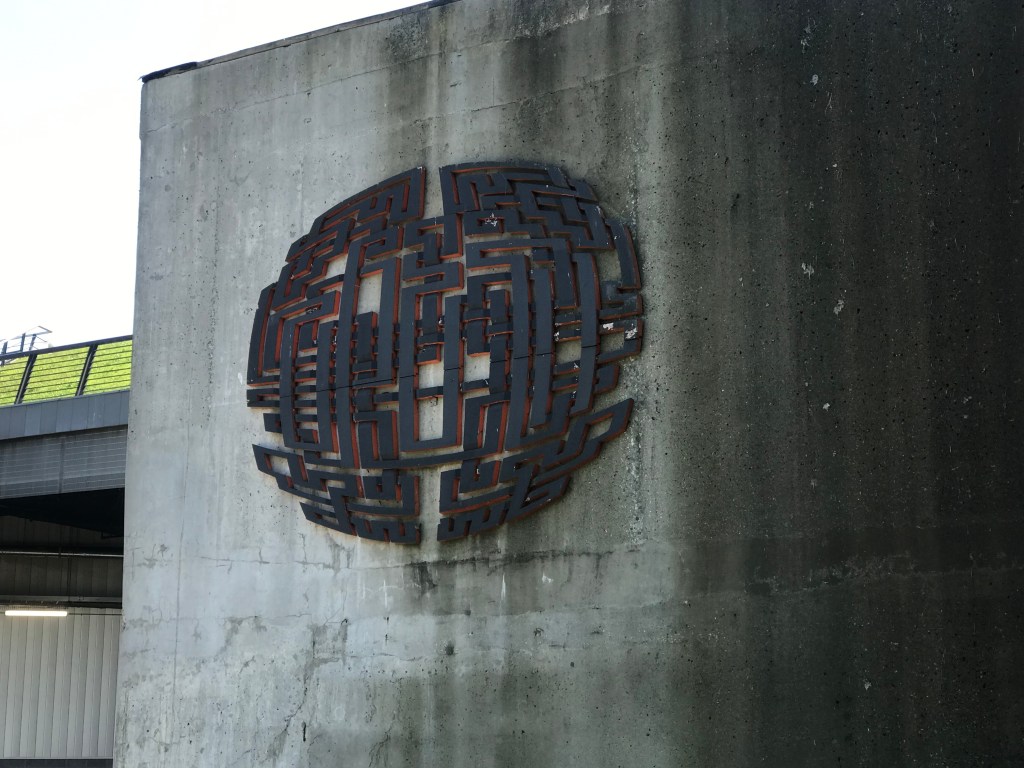
The next item on my to-see list was out at the University of British Columbia. Fortunately, it was on a direct bus route. Unfortunately, progress was slowed by most of West Broadway being dug up to put in a new subway. Eventually, the bus reached UBC, where I could find Brock Commons Tallwood House.
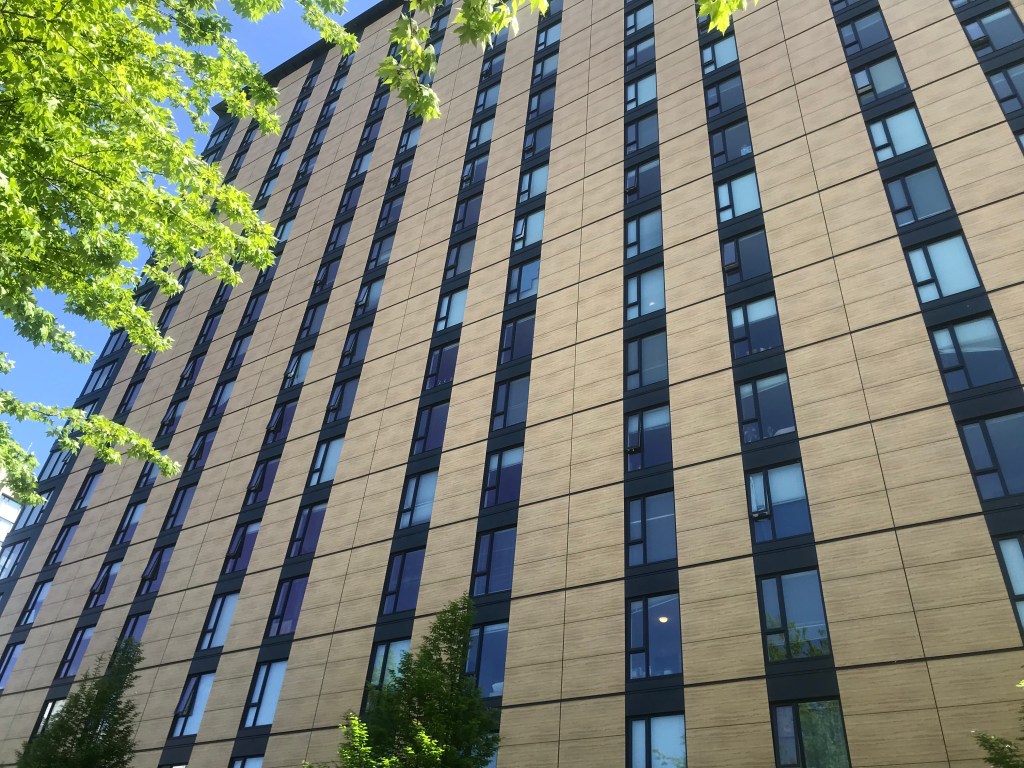
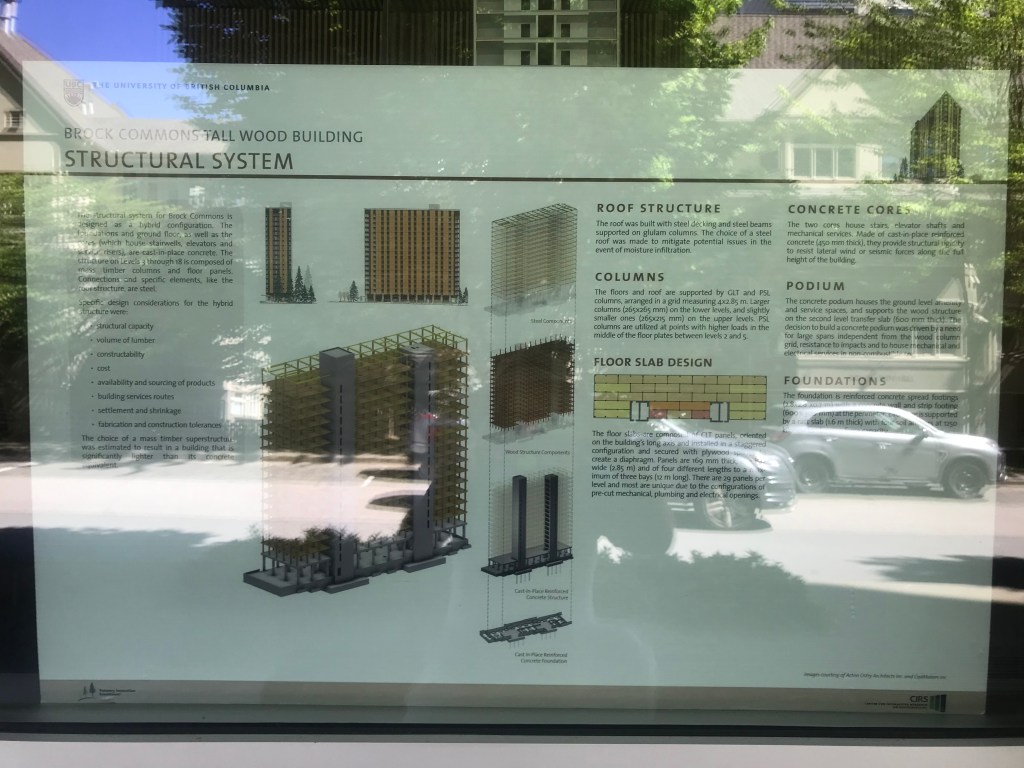
This is the tallest building made predominantly of wood, 53m high. It uses some concrete in the support infrastructure, but the walls, floors columns are made of treated wood, making it lighter than an equivalent steel-and-concrete building. On the ground floor, there’s a room with a model describing the whole construction, which, because this is a student residence building, I wasn’t allowed in to see.
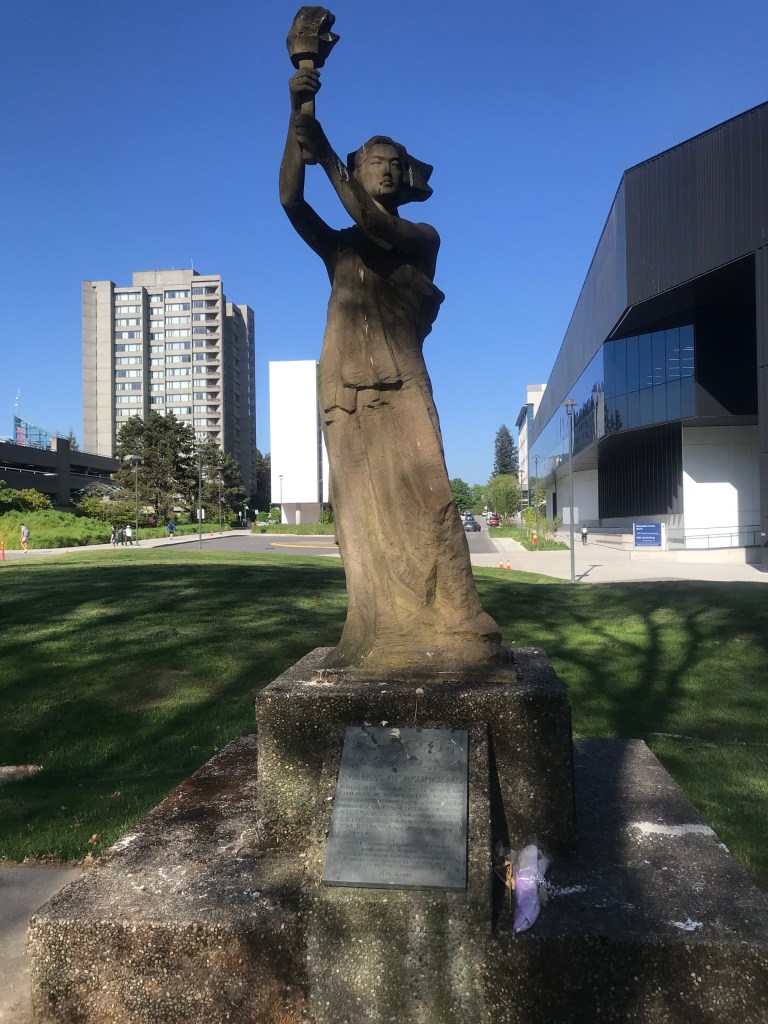
Judging from at the public maps around the place, UBC is the most spread-out campus I’ve ever been on; it’s effectively a small town.
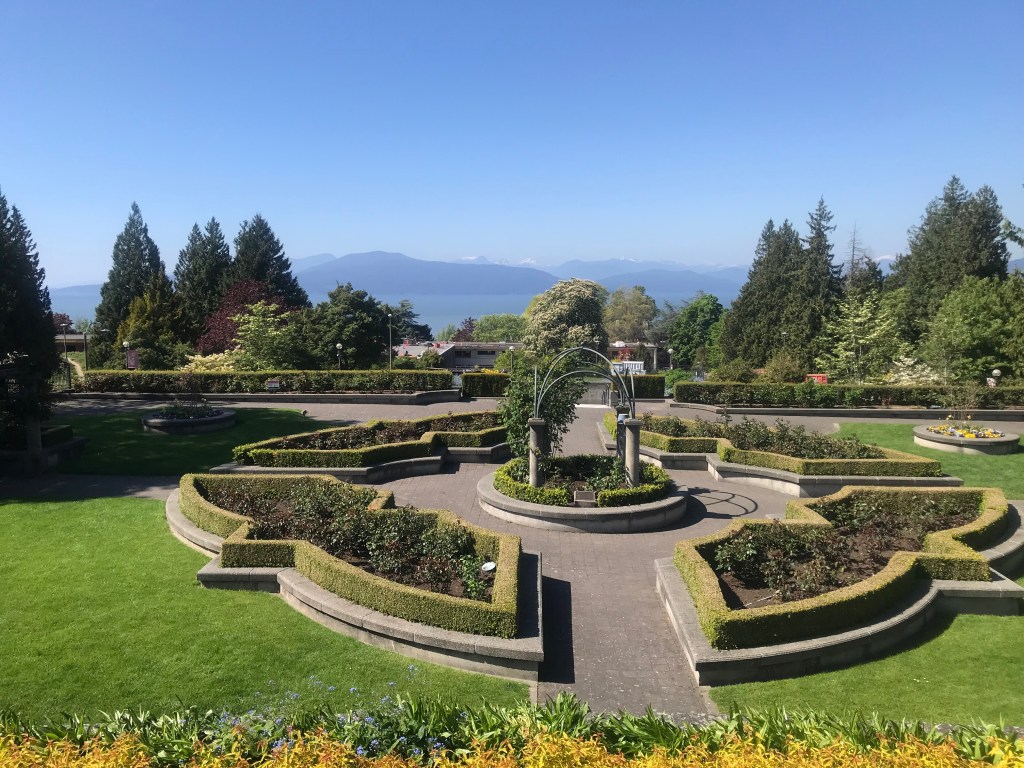
However, from Tallwood, I wasn’t far from my next destination: The Museum of Anthropology.
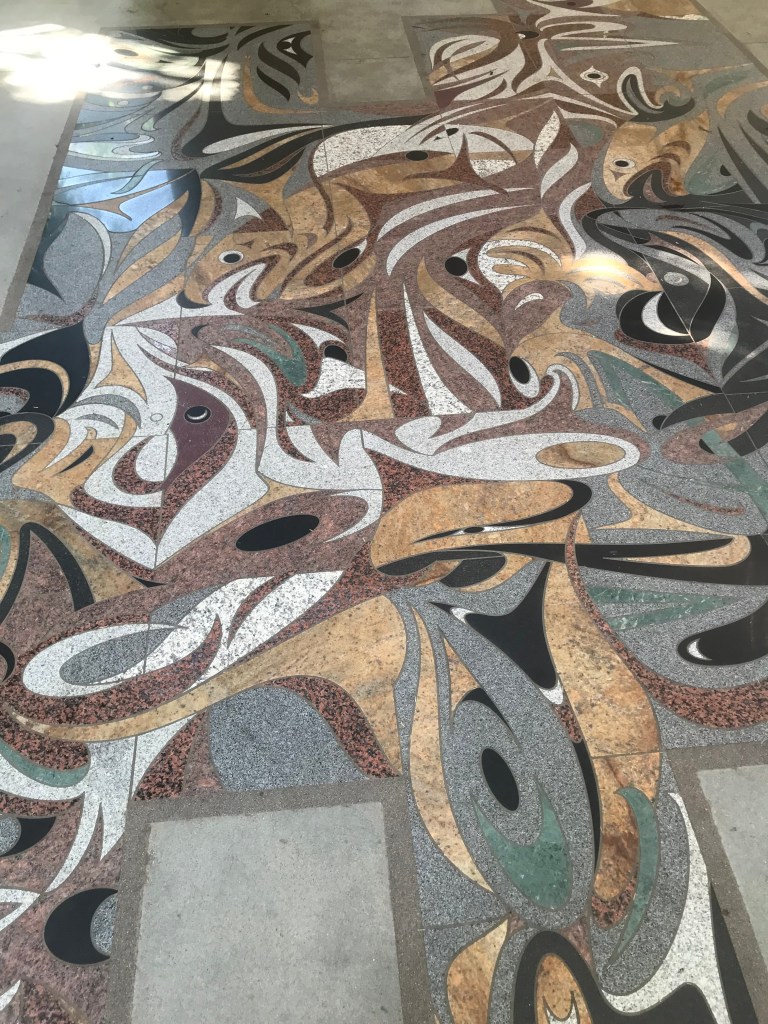
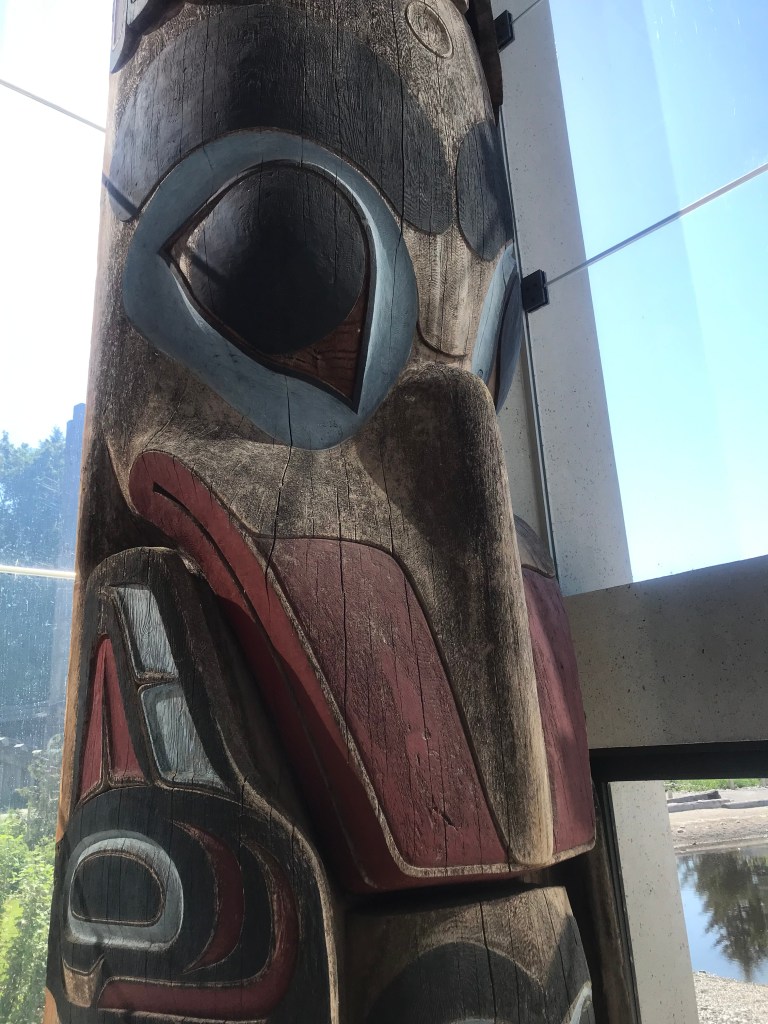
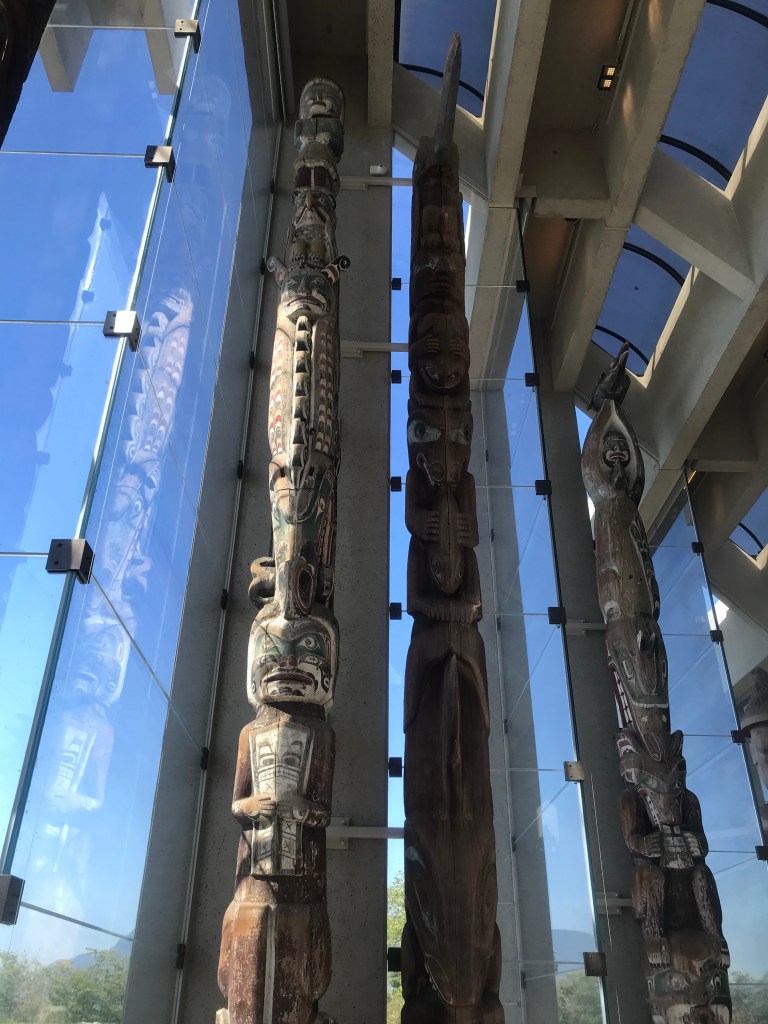
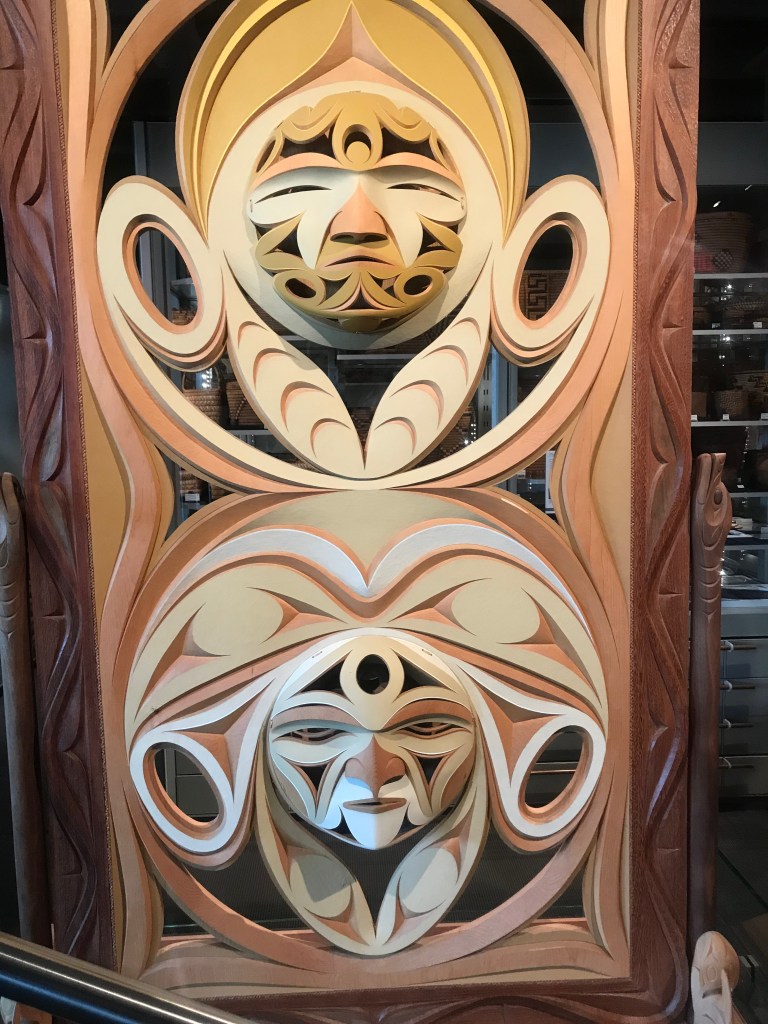
Most of the museum’s collection, naturally, focuses on local indigenous culture and artifacts, some carved specially for the museum.
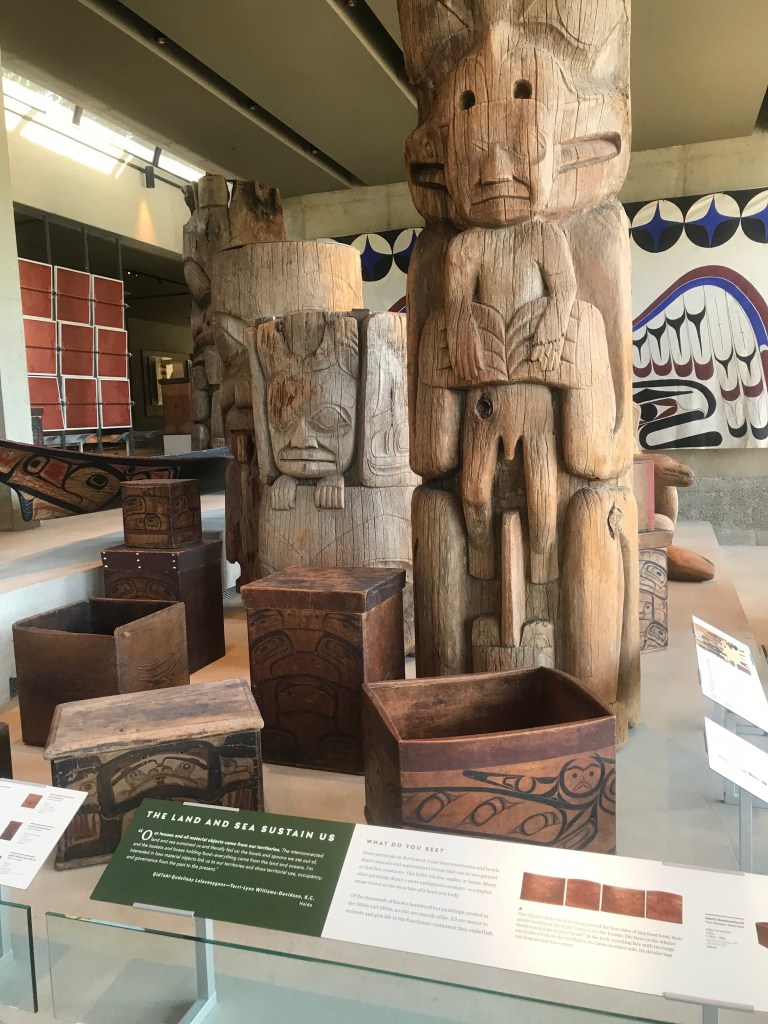
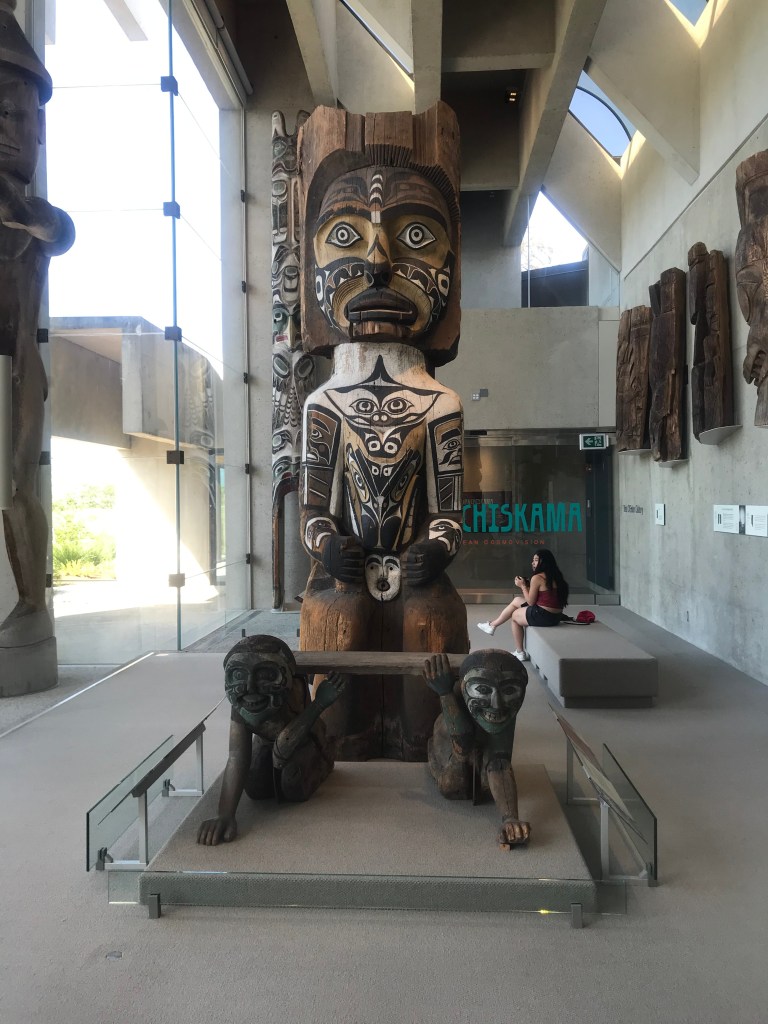
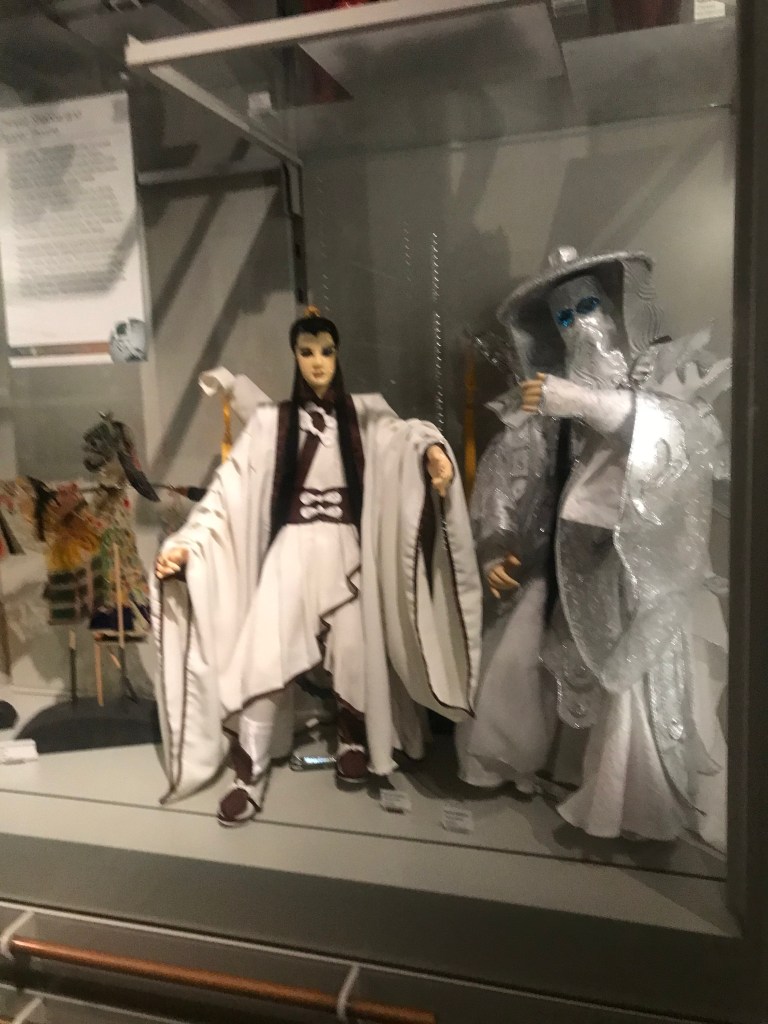
But it also has a large collection of items from other cultures: Japanese, Korean, Chilean, Mexican, Ancient Greek… whole rooms of these. Unfortunately, I’d arrived just over an hour before closing, so I couldn’t examine much in detail.
Thought I’d be smart and take a cross-town bus that’d cut out most of the stations back to Richard and Tina’s place. Didn’t account for peak-hour traffic, so all time advantage lost.
 Way Up North
Leave a comment